

Fear at Sea: The Suspected Hantavirus Outbreak That Left a Cruise Ship in Crisis
What was supposed to be a relaxing journey across the Atlantic Ocean slowly turned into a nightmare for hundreds of passengers aboard a cruise ship near Cape Verde.
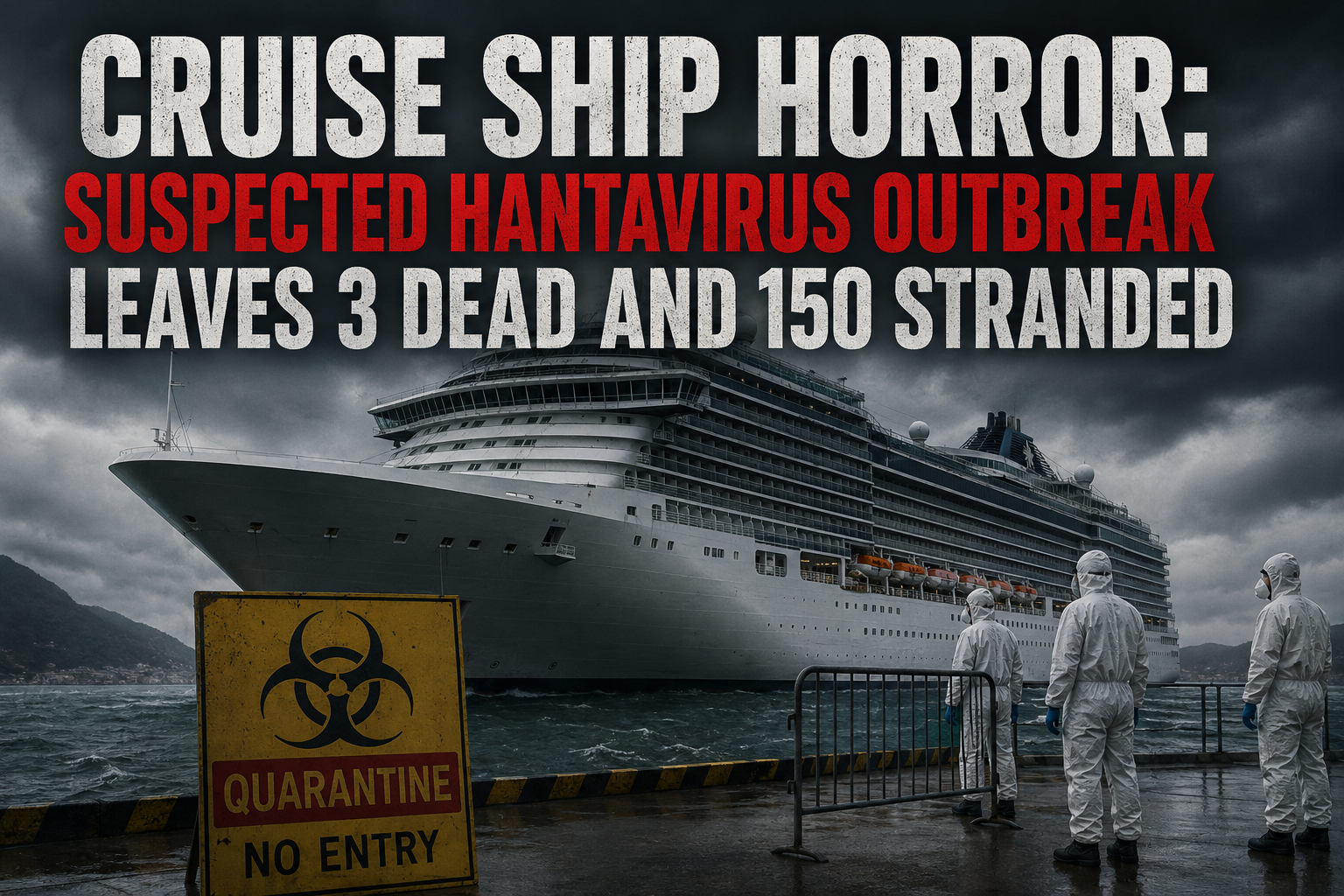
“Cruise Ship Horror: Suspected Hantavirus Outbreak Leaves 3 Dead and 150 Stranded”
Between early April and May, reports began emerging about a suspected outbreak of Hantavirus Infection on the ship. At first, it seemed like a few passengers were simply suffering from fever and fatigue. But day passed, the situation became far more serious.
Passengers reportedly started falling ill one after another. Fear spread across the ship as rumors circulated about a mysterious virus. Some travelers remained isolated in their cabins, while others desperately searched for answer about what was happening onboard.
Then came the heartbreaking news.
Three passengers-a Dutch couple and a German national-reportedly lost their lives after becoming seriously ill. Around 150 passengers were said to be stranded as health authorities investigated the situation and tried to contain the suspected outbreak.
For many people following the story, one question quickly became important:
What exactly is Hantavirus?
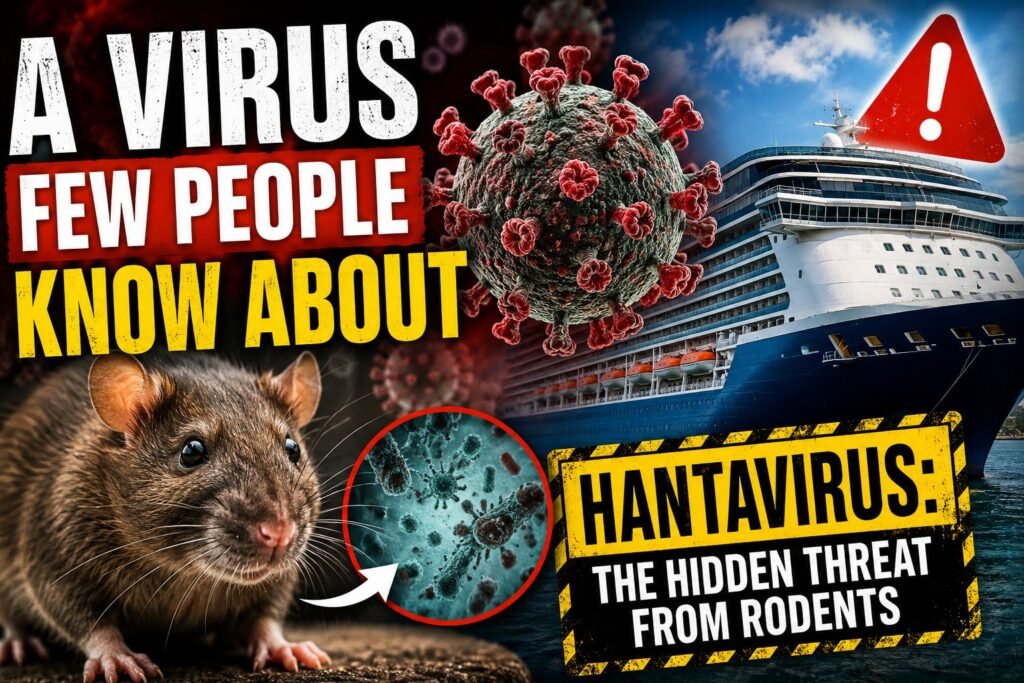
A virus Few People Know About
Unlike diseases such as COVID-19 or influenza, Hantavirus is not widely discussed in everyday life. Many people hear its name for the first time only when rare outbreaks appear in the news.
The virus gets its name from the Hantan River, where scientists first identified it during the 1970s.
Although it sounds unfamiliar to many, doctors and researchers have studied Hantavirus for decades because of how dangerous it can become in severe cases.
What makes the disease especially concerning is the way it spreads.
Hantavirus is mainly carried rodents. Humans usually become infected after coming into contact with particles contaminated by rodent urine, saliva, or droppings. In some cases, people inhale tiny airborne particles without even realizing it.
Experts say the virus can spread when contaminated dust becomes airborne during cleaning or poorly ventilated spaces. More rarely, bites or scratches from infected rodents may also transmit the virus.
This connection to rodents has made the cruise ship incident especially alarming. Cruise ship are usually associated with luxury vacations, entertainment, and scenic travel-not dangerous viral infections.
That contrast is part of what has made this story so unsetting for many people around the world.
How the Situation Reportedly Unfolded
According to reports, the outbreak began quietly.
Some passengers started experiencing flu-like symptoms, including fever, body aches, and exhaustion. At first, many may not have considered the symptoms serious. On a long journey, fatigue or mild illness can seem normal.
But within days, conditions reportedly worsened for several passengers.
People developed breathing problems, coughing, and severe weakness. Fear began spreading throughout the ship as more travelers fell ill.
Cruise ships are unique environments. Thousands of people share dining halls, hallways, recreation areas, and ventilation systems. When illness appears onboard, anxiety can spread just as quickly as the disease itself.
Passengers reportedly became increasingly worried as medical teams monitored the situation. Some travelers stayed confined to their rooms. Others contacted family members back home, sharing and uncertainty about what was happening.
As health officials investigated the suspected outbreak, the ship reportedly faced delays and restrictions, leaving passengers stranded near Cape Verde.
For families waiting for news, the uncertainty became emotionally exhausting.
The Two Faces of Hantavirus
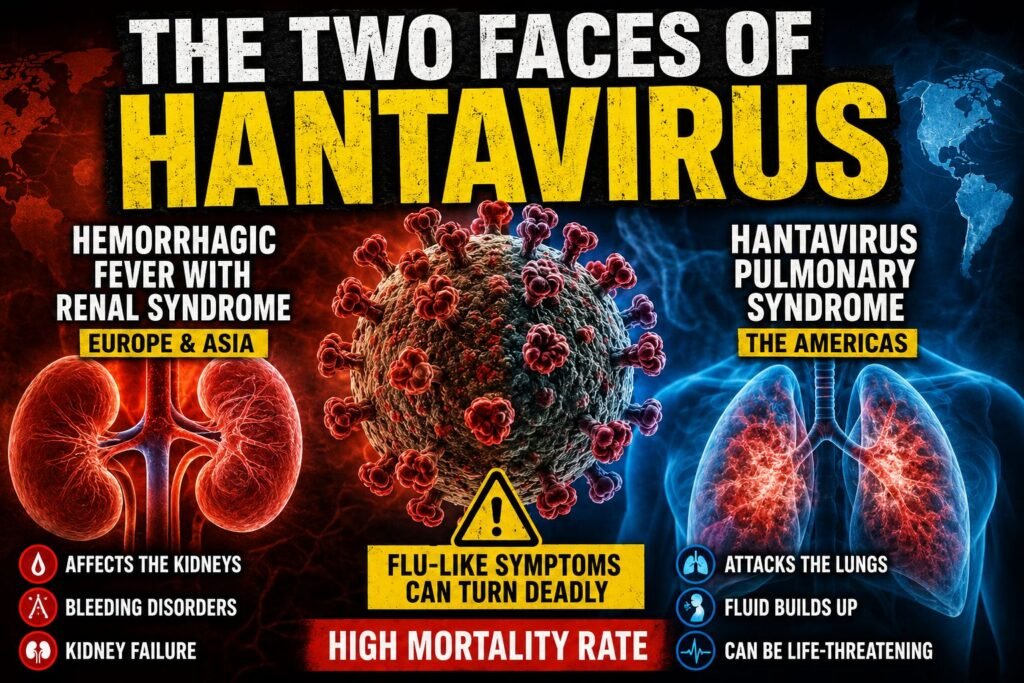
Doctors classify Hantavirus infections into two major categories depending on the region where they are found.
The first type is known as:
Hemorrhagic Fever with Renal Syndrome
This form is commonly found in parts of Europe and Asia. It mainly affects the kidneys and can lead to dangerous complication, including bleeding disorders and kidney failure.
The second type is:
Hantavirus Pulmonary Syndrome
This version is mostly associated with the Americas and is considered especially dangerous because it attacks the lungs and respiratory system.
Doctors say this respiratory form can become life-threatening very quickly.
Patients may initially feel like they have the flu. But after several days, fluid can begin building up inside the lungs, making breathing extremely difficult.
In severe cases, patients require oxygen support or mechanical ventilation in intensive care units.
The mortality rate for serious Hantavirus Pulmonary Syndrome cases is considered high, which is why healy experts take suspected outbreaks very seriously.
Symptoms That Start Like the Flu
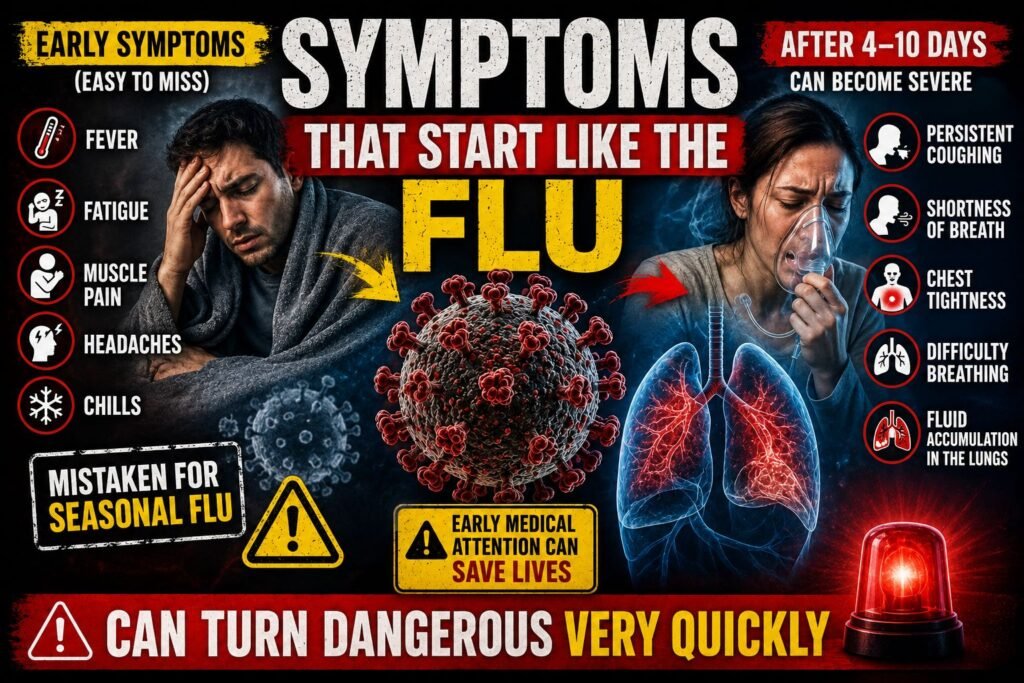
One of the most frightening aspects of Hantavirus is how ordinary the early symptoms can appear.
In the beginning, many infected people experience:
- Fever
- Fatigue
- Muscle pain
- Headaches
- Chills
These symptoms can easily be mistaken for seasonal flu or viral fever.
But after around four to ten days, the illness may suddenly become severe.
Patients can develop:
- Persistent coughing
- Shortness of breath
- Chest tightness
- Difficulty breathing
- Fluid accumulation in the lungs
Doctors say the transition from mild illness to severe respiratory distress can happen rapidly.
This is why early medical attention is considered extremely important.
Life Aboard a Ship During a health Crisis
For passengers trapped in the middle of the ocean, the emotional pressure can become overwhelming.
Unlike hospitals on land, medical resources onboard ship are limited. During a suspected outbreak, uncertainty can can create panic among travelers and crew members alike.
Passengers may begin avoiding public areas. Dining halls become quieter. Hallways feel tense. Every cough or sneeze suddenly feels frightening.
Some people worry about their own symptoms. Other worry about elderly passengers or family members traveling with them.
For the crew, the responsibility becomes enormous. They must continue operating the ship while also trying to manage a growing medical emergency.
The psychological impact of such situations is often forgotten in headlines. Behind every report are real people experiencing fear, confusion, and emotional stress far from home.
Why Hantavirus Is difficult to Treat
At present, there is no specific cure for Hantavirus infection.
Doctors mainly focus on supportive treatment aimed at helping the body survive the most dangerous phase of the illness.
Treatment may include:
- Oxygen therapy
- Careful fluid management
- Blood pressure suppqarentineort
- Ventilator assistance in severe cases
- Intensive medical monitoring
Expert say patients who receive early treatment in hospitals often have a better chance of recovery.
Still, severe respiratory infections can remain highly dangerous even with advanced medical care.
2 thoughts on ““Cruise Ship Horror: Suspected Hantavirus Outbreak Leaves 3 Dead and 150 Stranded””