

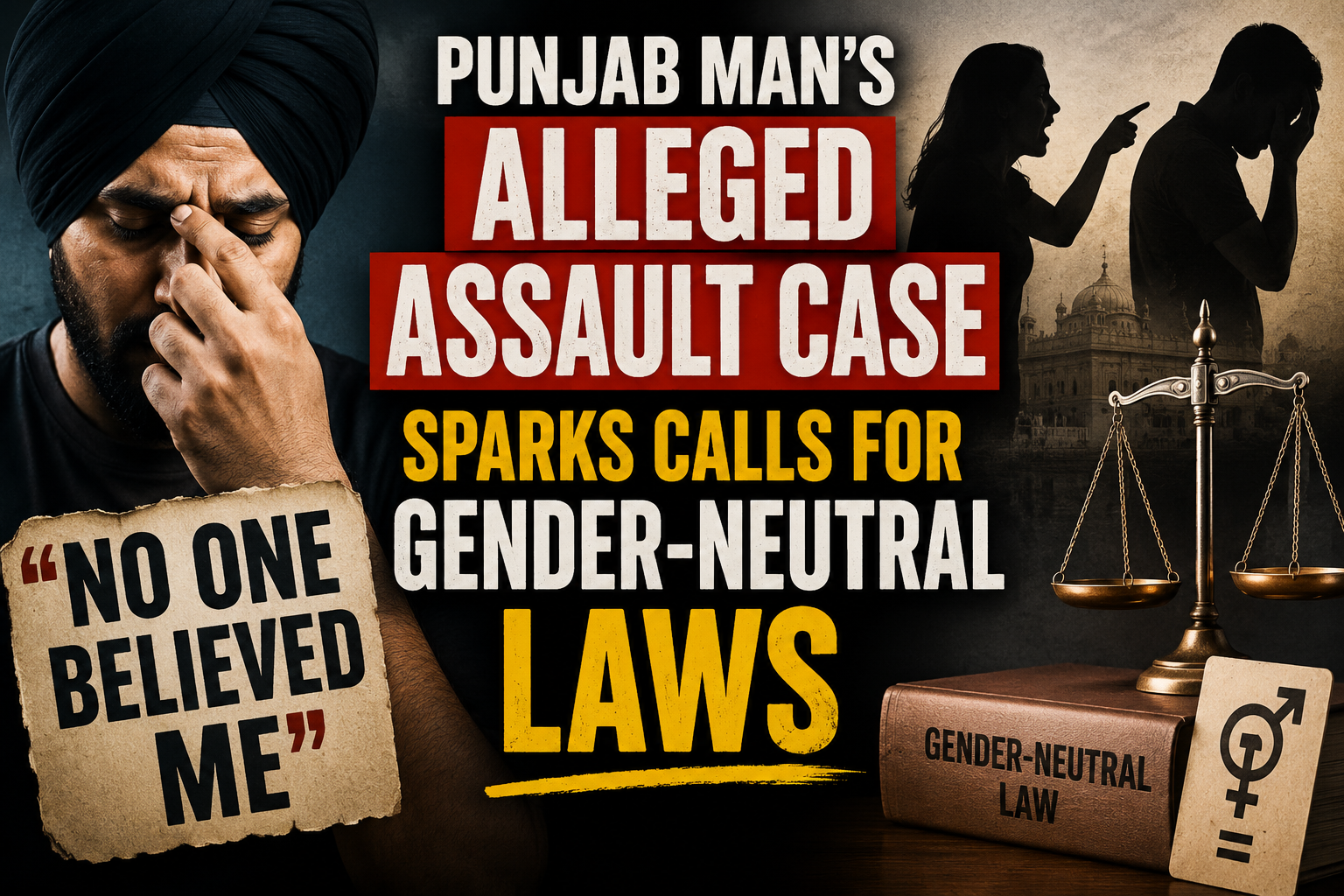
Punjab Shocker: Man Alleges Abduction and Sexual Assault by Four Women, Sparking Debate on Gender-Neutral Laws in India.
A shocking incident from punjab’s Jalandhar district has triggered a nationwide discussion about whether India’s sexual assault laws should be made gender-neutral.“No One Believed Me”: Punjab Man’s Alleged Assault Case Sparks Calls for Gender-Neutral Lawas.
According to the victim’s complaint, he was allegedly abducted by four women who approached him under the pretext of asking for directions. The man claims the women sprayed an unknown substance on his face, forced him into a car, made him consume alcohol, and then sexually assaulted him while the vehicle was moving.
While police continue to investigate the allegations, the case already sparked intense debate across social media, legal circles, and advocacy groups. Many people believe the incident highlights a major gap in India’s legal system, where adult male victims of sexual assault often do not receive the same legal recognition as female victims.
A Case That Has Shocked Many:
Stories involving sexual assault typically focus on women as victims, which reflects the reality that women continue to face a disproportionately high number of such crimes. However, the allegations emerging from Jalandhar have brought attention to an issue that is rarely discussed in public-male victims of sexual violence.
The victim alleges that what started as a seemingly harmless request for directions quickly turned into a traumatic ordeal. His account has raised serious questions about how such cases are handled under Indian law and whether current legislation adequately protects all victims, regardless of gender.
As investigators work to establish the facts, the incident has become part of a much larger conversation about justice, quality, and legal reform.
Why This Case Has Started a National Debate:
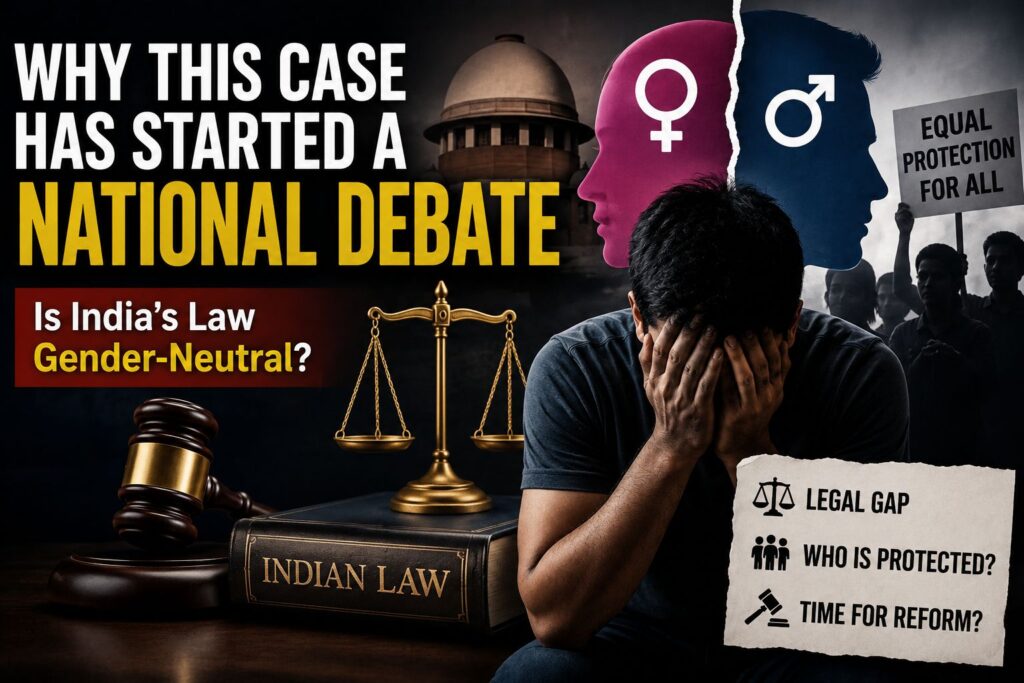
One of the main reasons this case has attracted so much attention is the legal challenge surrounding it.
Under India’s current laws, rape is defined in a way that primarily recognizes women as victims and men as perpetrators. Critics argue that this leaves adult male victims, transgender individuals, and members of the LGBTQ+ community without the same legal protections available to women.
Many legal experts believe that crimes of sexual violence should be addressed based on the nature of the offence rather than the gender of the people involved.
For them, the Jalandhar case highlights the need to revisit existing laws and consider whether they reflect the realities of modern society.
The Question of Gender-Neutral Laws:
The discussion around gender-neutral sexual assault laws is not new. For years, activists and legal scholars have debated whether India’s legal framework should be expanded to protect all survivors equally.
Supporters argue that sexual assault can happen to anyone and that every victim deserves access to justice, counselling, and legal protection.
They point out that while women remain the most affected group, acknowledging male victims does not take away from the struggles faced female survivors. Instead, it broadens the scope of protection and ensures that nobody falls through legal loopholes.
Others believe reforms must be carefully designed to ensure that existing protections for women are not weakened.
As a result, the issue remains one of the most complex and sensitive topics in India’s legal system.
POCSO Shows a Different Approach:
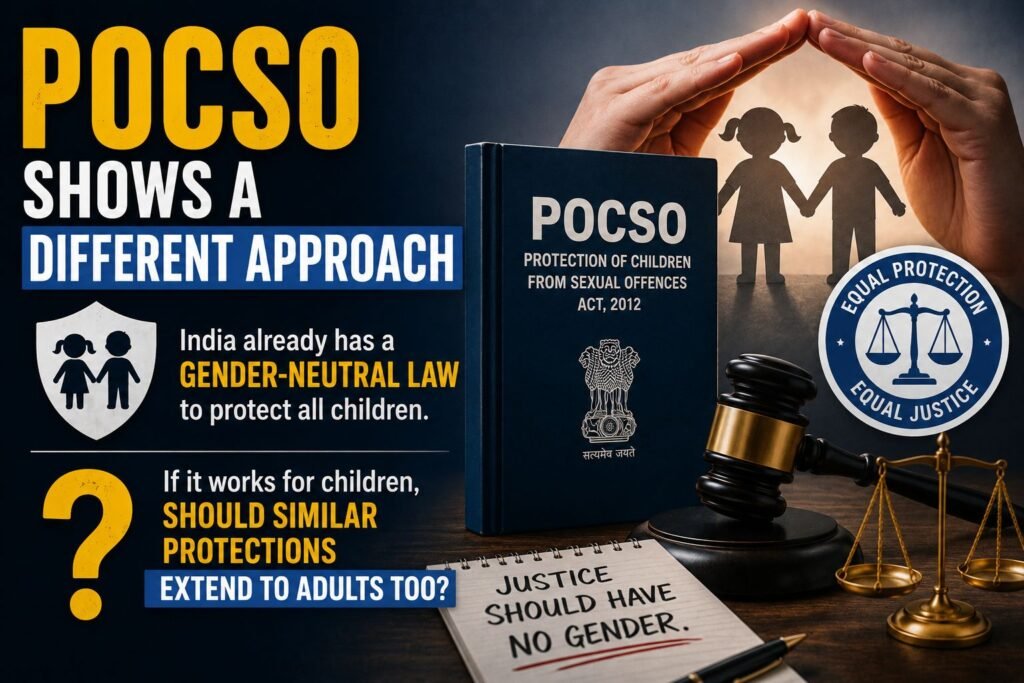
Interestingly, India already has a gender-neutral law when it comes to protecting children.
The Protection of Children from Sexual Offences (POCSO) Act safeguards all minors, regardless of whether they are boys or girls. Under the law, sexual offences against children are treated equally, and the gender of either the victim or the accused is not the primary factor.
This has led many legal experts to ask an important question: if gender-neutral protections work for children, should similar protections be extended to adults as well?
The Silent Struggle of Male Victims:
One aspect of sexual violence that often goes unnoticed is the social stigma faced by male survivors.
Many men who experience abuse choose not to report it because they fear being ridiculed, disbelieved, or judged. Cultural stereotypes often make it difficult for male victims to speak openly about their experiences.
Mental health professionals have repeatedly stressed that traums does not discriminate based on gender. Victims can experience anxiety, depression, emotional distress, and long-term psychlogical consequences regardless of whether they are male or female.
For this reason, many experts believe that support services and legal protections should be accessible to every survivor.
What Happens Next?
The investigation into the Jalandhar allegations is ongoing, and authorities will determine the facts based on evidence collected during the course of the inquiry.
At the same time, the broader debate surrounding the case is unlikely to fade anytime soon.
Whether or not India eventually adopts gender-neutral sexual assault laws remains a matter for lawmakers and courts to decide. However, this case has once again brought attention to an important question: should legal protection against sexual violence apply equally to everyone, regardless of gender?
As the discussion continues, many hope that the focus remains on ensuring justice, dignity, and support for every victim of sexual violence.
A Wider Conversation About Justice and Recognition:
Beyond the legal questions, the Jalandhar case has touched a nerve because it challenges long-held assumptions about who can be a victim of sexual violence. For many people, the allegations serve as a reminder that trauma is not limited by gender, age, or social status.
In recent years, conversation around mental health and victim support have become more open, encouraging survivors from different backgrounds to share their experiences. However, many male victims still hesitate to come forward due to fear of embarrassment, social stigma, or concerns that their complaints will not be taken seriously. As a result, experts believe that many cases may go unreported.
The incident has also sparked discussions about the importance of creating a legal system that focuses on the experience of the victim rather than preconceived notions about gender. Advocates arue that recognizing all survivors does not diminish the suffering of women, who continue to face high rates of sexual violence. Instead, it strengthens the principle that justice should be available to everyone who experiences abuse.
As public debate continues, many abservers believe the case could become an important moment in India’s ongoing discussion about legal reform, victim right, and equal access to justice. Regardless of the outcome of the investigation, it has already encouraged a broader conversation about how society responds to survivors and whether existing laws adequately reflect the realities faced by all victims of sexual violence.
1 thought on ““No One Believed Me”: Punjab Man’s Alleged Assault Case Sparks Calls for Gender-Neutral Lawas”