

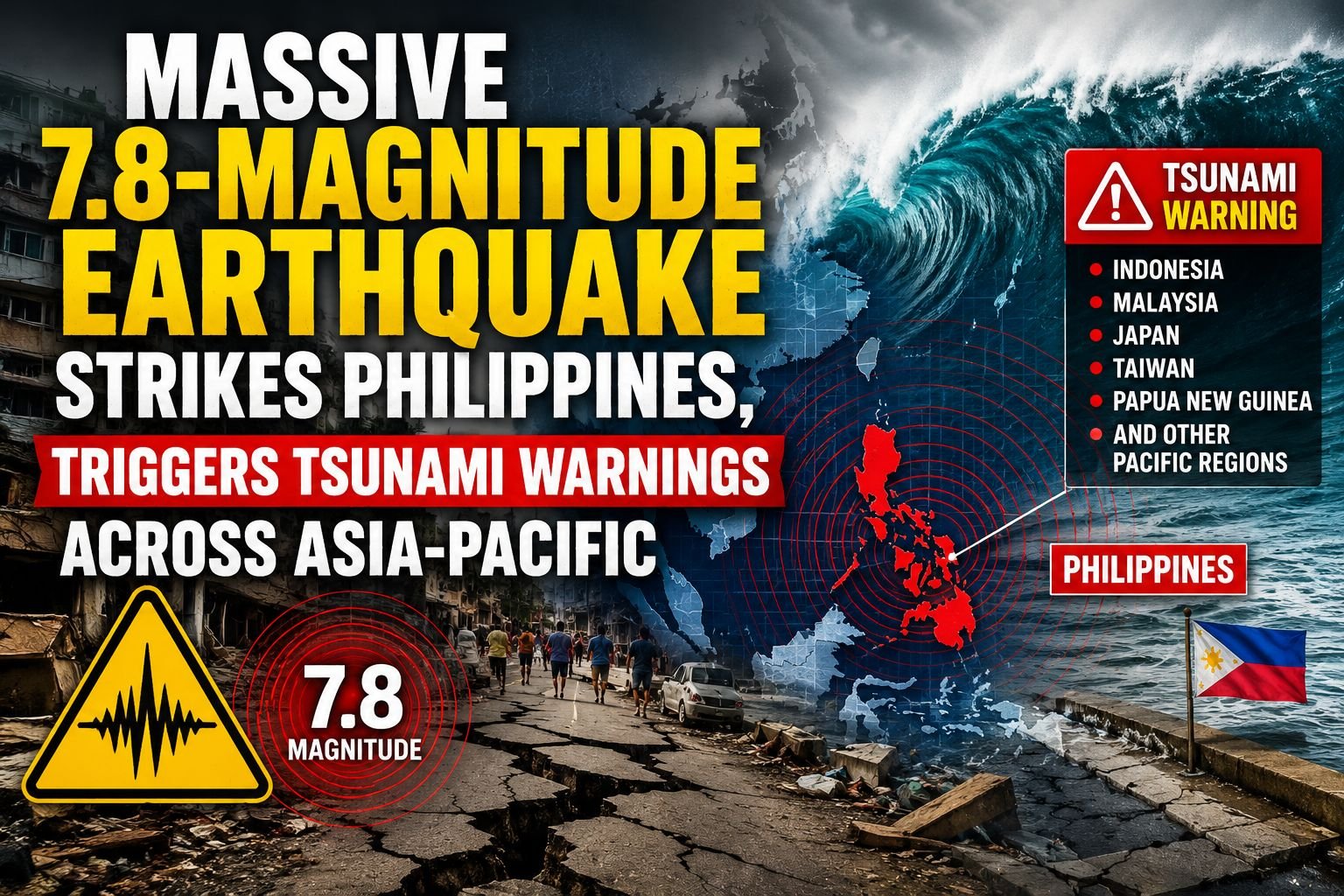
Powerful 7.8-Magnitude Earthquake Hits Philippines, Triggers Tsunami Alerts Across Asia-pacific:
A powerful 7.8-magnitude earthquake struck off the southern coast of the Philippines near Mindanao, sending shockwaves across the region and triggering tsunami warnings in several countries across the Asia-Pacific. Massive 7.8-Magnitude Earthquake Strikes Philippines, Triggers Tsunami Warnings Across Asia-Pacific.
The undersea quake struck during the day, causing panic among residents as buildings shook violently and emergency alerts were issued. Thousands of prople living in coastal communities rushed to higher ground after authorities warned of possible tsunami waves.
Governments across the region quickly activated emergency response systems, while disaster management agencies urged prople to stay away from beaches and low-lying coastal areas.
Panic as Strong Tremors Rock Southern Philippines:
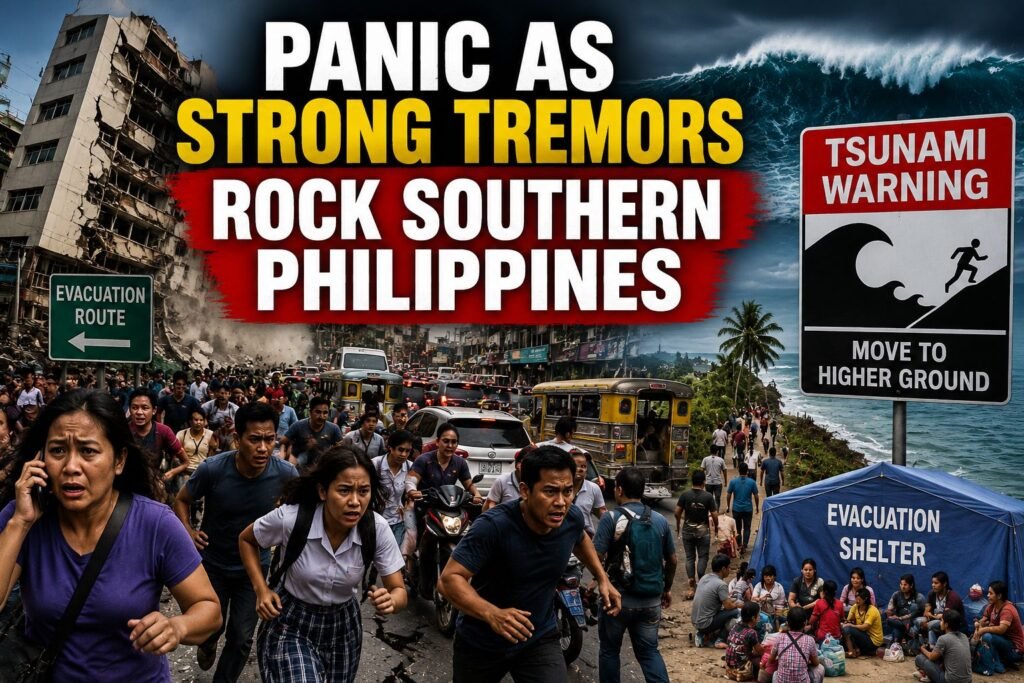
Residents in parts of Mindanao described moments of fear and confusion as the earthquake struck. Many people ran out of homes, offices, shopping centers, and schools as the ground shook for several seconds.
Videos shared on social media showed swaying buildings, frightened residents gathering in open spaces, and traffic congestion as people attempted to evacuate vulnerable areas.
Local authorities immediately began evacuating coastal communities, fearing that the powerful undersea earthquake could generate dangerous tsunami waves.
Emergency shelters were opened in several locations to accommodate families forced to leave their homes.
Tsunami Warnings Issued Across Multiple Countries:
Shortly after the earthquake, tsunami monitoring centers issued warnings and advisories for several countries in the region.
Areas placed on alert included:
- The Philippines
- Indonesia
- Malaysia
- Japan
- Taiwan
- papua New Guines
- Several Pacific Island regions
Officials urged residents living near coastlines to move to safer locations and remain alert for further instructions.
Experts warned that tsunami waves can travel across vast distances and may take hours to reach some coastal areas. They also emphasized that the first wave is not always the largest, making it important for residents to follow evacuation orders untill authorities issue an official all-clear.
Initial Reports of Damage:
While the full extent of the damage is still being assessed, preliminary reports indicate that the earthquake caused structural damage in several affected areas.
Some communities reported:
- Cracked roads and bridges
- Damage to homes and commercial buildings
- Temporary power outages
- Disruptions to communication networks
- Fallen debris and damaged infrastructure
Emergency response teams have been deployed to inspect buildings, assess risks, and assist affected residents.
Hospitals and medical centers have also been placed on high alert in preparation for potential injuries linked to the earthquake and its aftershocks.
Aftershocks Raise Further Concerns:

Following the main quake, several aftershocks were recorded in the region, adding to concerns among residents and emergency officials.
Seismologists say strong aftershocks are common after major earthquakes and can sometimes cause additional damage, especially to structures already weakened by the initial tremor.
Authorities have advised residents to remain cautious and avoid entering damaged buildings until safety inspections are completed.
Emergency agencies continue to monitor seismic activity closely as the situation develops.
Why the Philippines Faces Frequent Earthquakes:
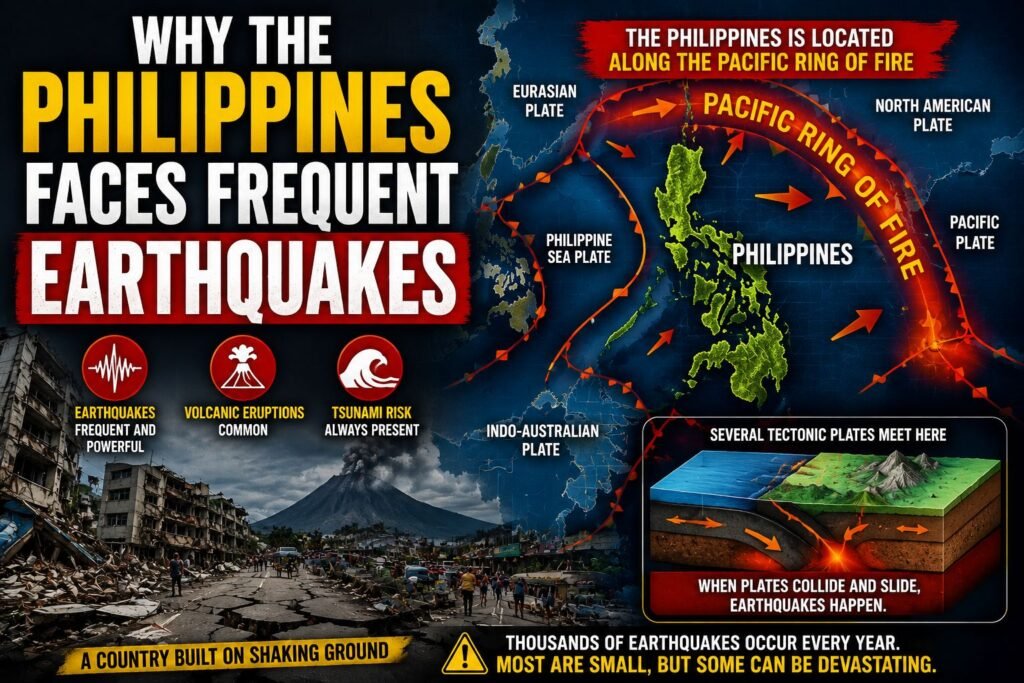
The Philippines is located along the Paciffic Ring of Fire, one of the most seismically active regions on Earth.
This vast area surrounds the Pacific Ocean and is known for frequent earthquakes, volcanic eruptions, and tsunami-generating seismic activity.
Because several tectonic plates meet beneath and around the Philippines, the country experiences thousands of earthquakes every year. While most are minor, powerful earthquakes such as this one can have devastating consequences.
Emergency Response in Full Swing:
Government agencies, rescue teams, military personnel, and local authorities have launched large-scale emergency operations following the disaster.
Their immediate priorities include:
- Conducting search and rescue missions
- Assessing infrastructure damage
- Providing emergency medical assistance
- Supporting evacuated families
- Monitoring tsunami threats and aftershocks
Officials are urging residents to rely on verified information from government agencies and avoid spreading unconfirmed reports on social media.
Potential Economic Impact:
Beyond the immediate threat to life and property, major earthquakes often leave a lasting economic impact.
If significant damage is confirmed, authorities may face substantial costs related to rebuilding roads, bridges, school, hospitals, and other critical infrastructure.
Businesses in affected areas could also experience disruptions, while transporatation and tourism sectors may face temporary setbacks.
Experts say it may take several days before a clearer picture of the overall impact emerges.
A Region On Alert:
As emergency teams continue their work, millions of people across the Asia-Pacific region remain on alert for possible tsunami activity and additional aftershocks.
Authorities are closely monitoring sea levels and seismic conditions while urging coastal residents to remain vigilant.
The coming hours will be crucial as officials assess the extent of the disaster and determine whether further evacuation measures are necessary.
For now, the focus remains on protecting lives, assisting affected communities, and ensuring public safety as the region responds to one of the strongest earthquakes recorded this year.
Global Seismic Experts Monitor Situation Closely:
The Powerful earthquake has also drawn attention from seismologists and disaster management experts worldwide. International monitoring agencies are closely tracking seismic activity in the region to determine whether additional significant aftershocks could occur in the coming days.
Experts note earthquakes of this magnitude release enormous amounts of energy, often equivalent to hundreds of atomic bombs. Such events can alter stress levels along nearby fault lines, sometimes increasing the likelihood of further seismic activity.
Humanitarian organizations are also preparing to assist affected communities if the damage proves extensive. Emergency supplies, including food, drinking water, temporary shelters, and medical equipment, may be deployed to vulnerable areas if required.
Menwhile, neighboring countries remain on standby as tsunami monitoring centers continue analyzing ocean conditions. Authorities emphasize taht preparedness and rapid response remain the most effective tools for reducing casualties during major natural disasters.
Conclusion:
The 7.8-magnitude earthquake near Mindanao serves as a stark reminder of the powerful natural forces that shape the Asia-Pacific region. While emergency crews work to assess the damage and assist those affected, communities across several countries are hoping the tsunami threat remains limited and that casualties are kept to a minimum.
As the situation continues to unfold, authorities are urging residents to stay informed, follow official guidance, and remain prepared for possible aftershocks.
1 thought on “Massive 7.8-Magnitude Earthquake Strikes Philippines, Triggers Tsunami Warnings Across Asia-Pacific”