

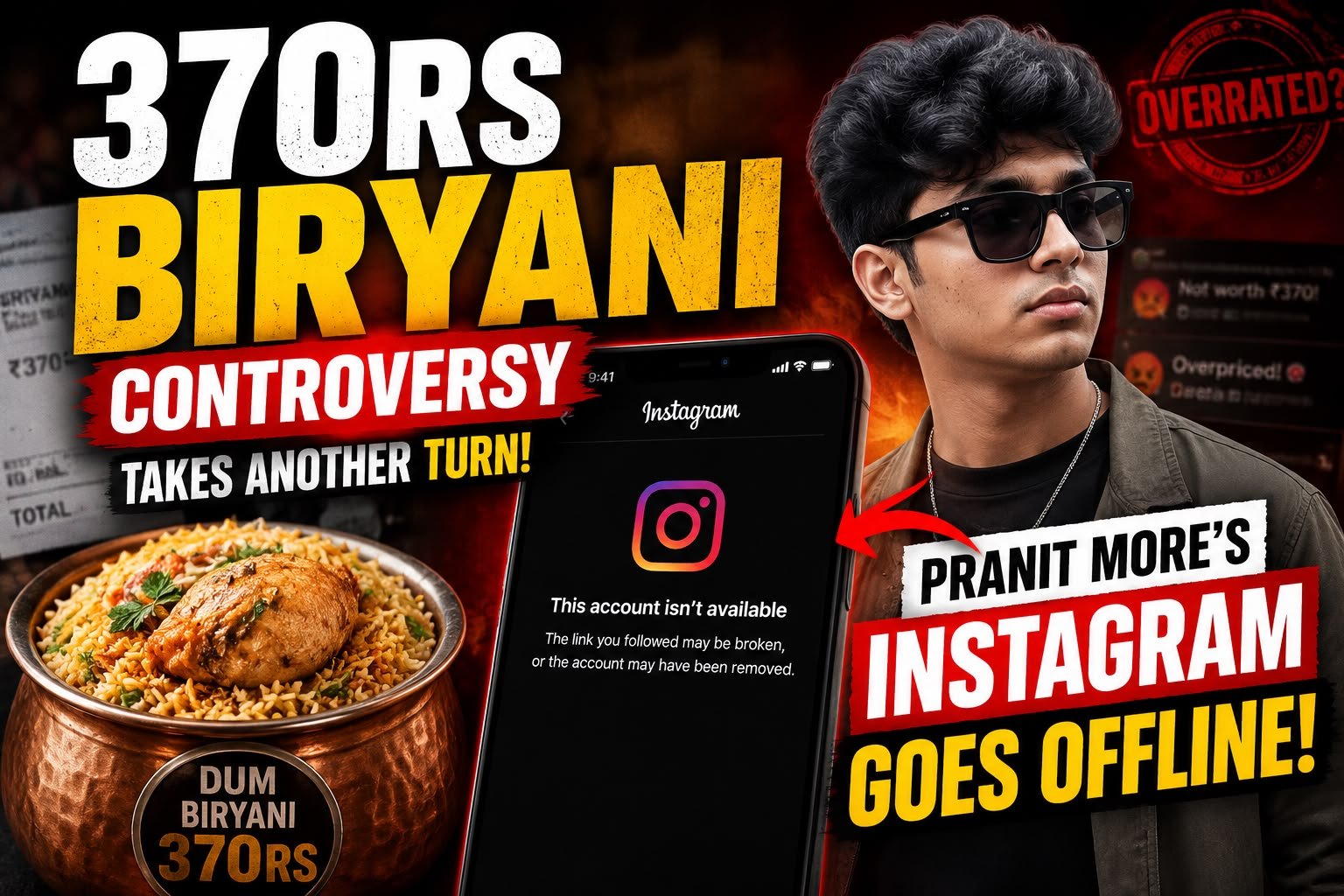
Pranit More Instagram Account Disappears Amid 370rs Biryani Controversy: A Debate on Consent, and Social Media Accountability:
Pranit More’s Instagram Account Vanishes as 370rs Biryani Controversy Continues.
Indian stand-up comedian Pranit More has found himself at the center of a growing social media storm after a viral clip from one of his comedy performances sparked widespread criticism online. The 370rs Biryani Controversy Takes Another Turn as Pranit More’s Instagram Goes Offline. Now, in a development that has further intensified public discussion, More’s Instagram account appears to have disappeared, leading many to speculate that the comedian has either deactivated or temporarily suspended his profile amid the ongoing back;ash.
The controversy, popularly referred to as the “370rs Biryani” incident, has become one of the most talked-about topics across social media platforms. What initially began as a audience participation, privacy, consent, and the ethical boundaries of stand-up comedy.
As discussions continue, the incident has raised important questions not only about the responsibilities of comedians but also about the power of social media in shaping public opinion and accountability.
What is the 370rs Biryani Controversy?
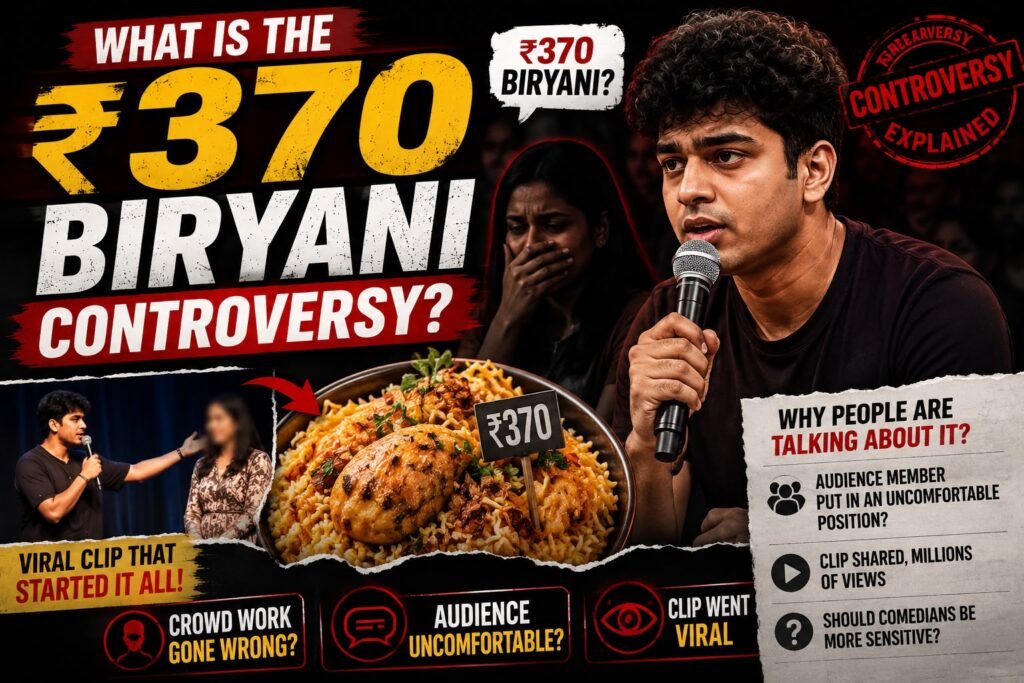
The controversy originated from a clip taken from one of Pranit More’s stand-up comedy performances. During the show, More interacted with an audience member as part of a crowd-work segment, a common practice in modern stand-up comedy where comedians engage directly with spectators.
The clip rapidly spread across social media platforms, accumulating millions of views within a short period. Soon, users began criticizing the comedian, arguing that personal stories and interactions involving audience members should be handled with greater sensitivity.
What ,ay have been intended as a humorous moment during a live show evolved into a larger debate about whether audience members fully understand that their interactions could eventually be shared online and reach millions of people.
Why Did the Video Spark Such Strong Reactions?
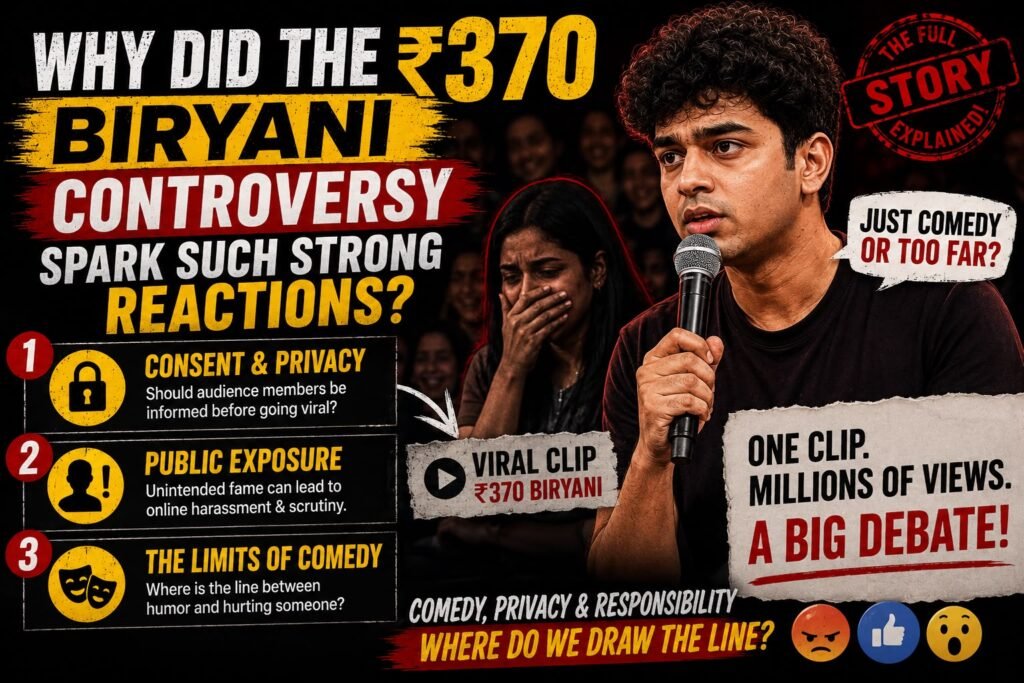
The Criticism Surrounding the clip largely centered on three key concerns:
1.Consent and Privacy
Many social media users questioned whether audience members ahould be explicitly informed when crowd-work interactions are recorded and uploaded online.
While attendees often expect some level of audience engagement during stand-up performances, critics argued that becoming the subject of a viral internet discussion is an entirely different matter.
The debate highlighted a growing concern in the difital era: where does public entertainment end personal privacy begin?
2.Public Exposure
Another major issue raised by critics involved the unintended consequences of viral fame.
Even when names are not disclosed, audience members featured in viral clips can become subjects of inintense public scrutiny. In some cases, internet users attempt to identify individuals involved, potentially exposing them to online harassment or unwanted attention.
Many commentators argued that comedians and content creators should consider these risks before publishing crowd-work videos online.
3.The Limits of Comedy
The incident also reignited an age-old discussion within the comedy world: Are there boundaries that comedians should not cross?
Supporters of artistic freedom argued that stand-up comedy has always involved uncomfortable truths, awkward situations, and spontaneous audience interactions.
Critics, however, maintained that entertainment should not come at the expense of someone’s dignity or personal comfort.
As a result, the controversy evolved beyond one particular joke and became part of a broader cultural conversation about modern comedy.
Pranit More Issues an Apology:
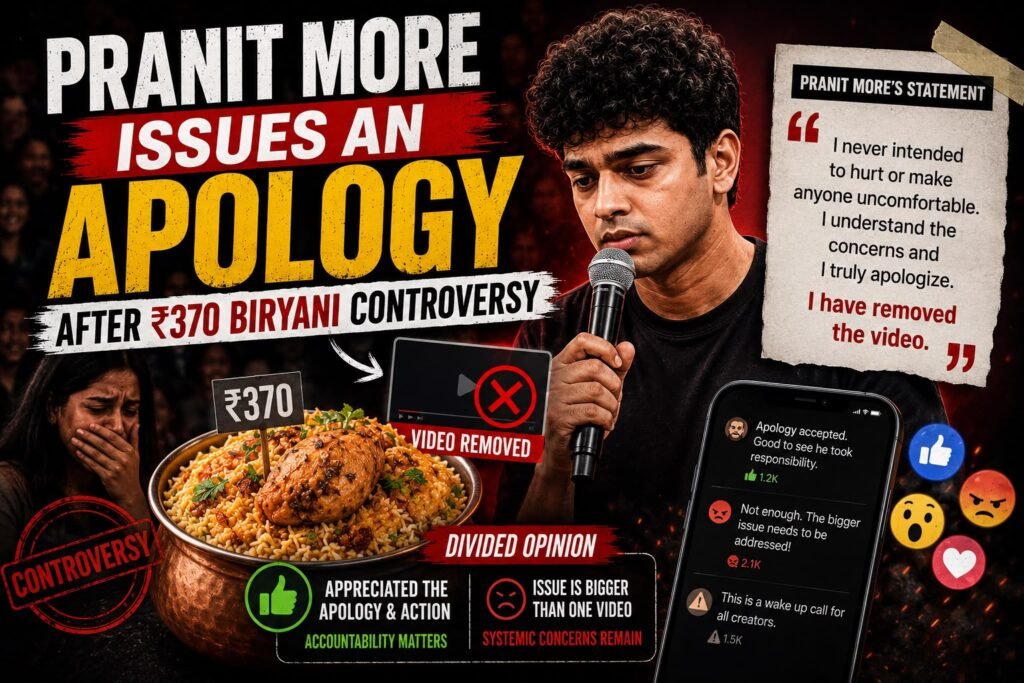
As criticism continued to grow, Pranit More responded by issuing a public apology.
The comedian acknowledged the concerns raised by viewers and subsequently removed the viral clip from public platforms. His ststement indicated thet he did not intend to cause harm or discomfort and expressed regret over the negative impact the video may have had.
While some social media users appreciated the apology and considered the matter resolved, others felt the issue extended beyond a single video.
This division in public opinion reflects a common pattern seen in online controversies today, Where apologies often fail to satisfy everyone involved in the discussion.
For supporters, the removal of the video demonstrated accountability.
For critics, however, the incident highlighted systemic concerns regarding content creation practices that deserve deeper examination.
Instagram Account Disappears Amid Ongoing Backlash:
In the latest development, Pranit More’s Instagram account appears to have become inaccessible.
The disappearance of the account quickly attracted attention from social media users, many of whom linked the move to the ongoing backlash surrounding the 370rs biryani controversy.
At the time of writing, there has been on official confirmation regarding whether the account was permanently deleted, temporarily deactivated, or removed for another reason.
Nevertheless, the timing has fueled speculation across various platforms.
Some observers believe the comedian may have chosen to step away from social media temporarily to avoid harassment and allow public attention to subside.
Others view the move as evidence of the intense pressure public figures face when subjected to large-scale online criticism.
Without an official statement, the exact reason behind the account’s disappearance remains unclear.
The Power of Social Media Outrage:
One of the most significant aspects of this controversy is how quickly it escalated.
A single clip that may have originally been intended for entertainment transformed into a national discussion within days.
This phenomenon demonstrates the immense influence social media now holds over public discourse.
Platforms such as Instagram, X, YouTube, and Reddit have fundamentally changed how controversies unfold. Moments that once remained confined to a live audience can now ve recorded, shared, and analyzed by millions of people worldwide.
As a result, creators face increasing scrutiny regarding the content they produce and publish.
At the same time, social media also empowers audiences to voice concerns and hold public figures accountable for their actions.
The Pranit More controversy illustrates both sides of this dynamic.
Conclusion:
The disappearance of Pranit More’s Instagram account has added a new chapter to the ongoing 370rs biryani controversy. While the comedian has already apologized and removed the viral clip, publi discussion surrounding the incident shows no signs of ending anytime soon.
Beyond the controversy itself, the situation has sparked meaningful conversations about consent, privacy, audience participation, and accountability in modern entertainment.
Whether viewed as an example of excessive online backlash or a necessary discussion about creator responsibility, the incident serves as a reminder of how quickly a single viral moment can evolve into a national conversation.
As social media continues to amplify both comedy and criticism, creators and audiences alike may need to rethink where the boundaries between entertainment and personal privacy should be drawn.