

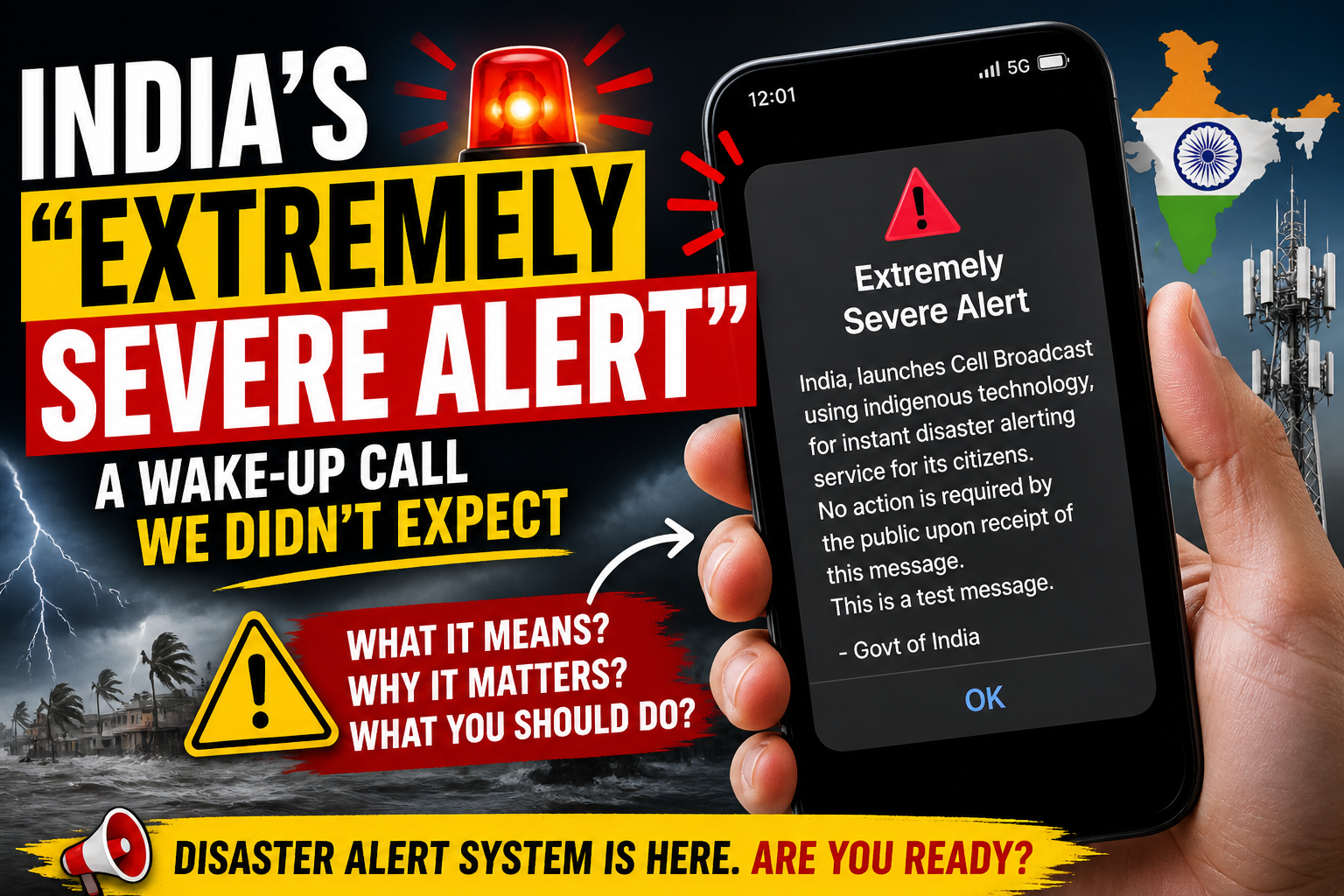
A few days ago, something unusual happened across India. Phones suddenly lit up with a loud, almost jarring alarm. On the screen, bold words appeared:
India’s “Extremely Severe Alert”: A Wake-up Call We Didn’t Expert:
For many people, it was a moment of genuine fear.
The sound was impossible to ignore. Even phones on silent mode buzzed loudly. People stopped what they were doing – whether they were working, scrolling social media, or even resting – and looked at their screens in confusion.
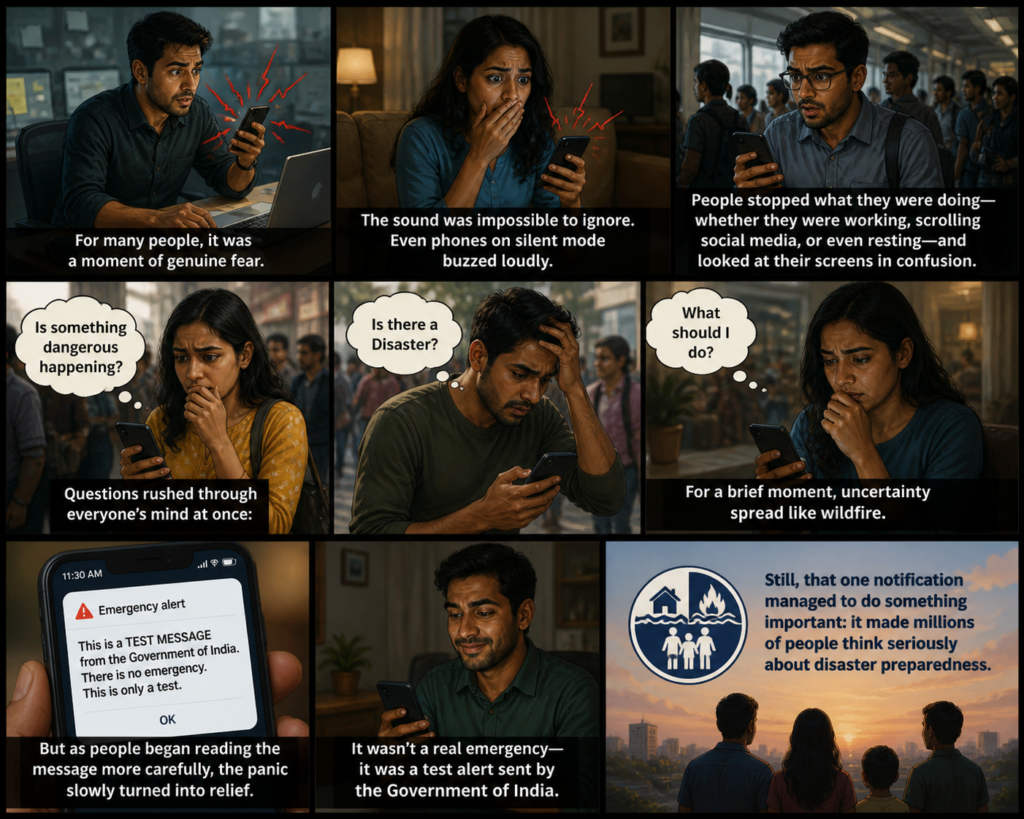
Question rushed through everyone’s mind at once:
- Is something dangerous happening?
- Is there a Disaster?
- What should i do?
For a brief moment, uncertainty spread like wildfire.
But as people began reading the message more carefully, the panic slowly turned into relief. It wasn’t a real emergency – it was a test alert sent by the Government of India.
Still, that one notification managed to do something important: it made millions of people think seriously about disaster preparedness.
So, What Was This Alert Really About?
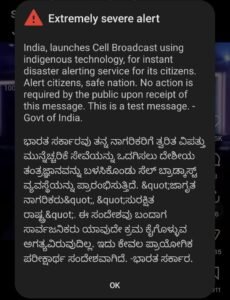
The message itself explained the situation clearly. it mentioned that India is launching a Cell Broadcast system using indigenous technology to improve disaster alerts. It also reassured users that no action was that it was only a test.
But here’s the thing – the wording “Extremely Severe Alert” combined with the loud alarm made it feel very real.
And maybe that was the point.
Because in an actual emergency, there won’t be time to double – check or calmly analyze the situation. The alert needs to grab your attention instantly – and that’s exactly what it did.
A technology You Didn’t Know You Needed:
Most of us used to receiving SMS message or app notifications. But this alert came through something different: Cell Broadcast technology.
Unlike regular messages, this system doesn’t need your phine number. It sends alerts directly to all phones in a specific area using nearby mobile towers.
That means:
- Everyone in the affected region gets the message at the same time
- It doesn’t matter which network you use
- It works even if networks are overloaded
Think about situations like floods, earthquakes or cyclones. In those moments, communication networks can get jammed. Calls fail. Messages don’t go through.
But Cell Broadcast is designed to work even in those conditions. It cuts through the noise – literally and technically.
Why India Is Taking This Step:
India is no stranger to natural disasters.
Every year, different parts of the country face serious challenges – cyclones hitting coastal areas, floods during the monsoon season, earthquakes in certain zones, landslide in hilly regions and intense heatwaves in others.
In many part situations, one major issue has been delayed communication. By the time warning reached people, it was often too late to react effectively.
That’s where this new system comes in.
->The goal is simple but powerful:
- Warn People instantly , so they have time to act.
Even a few minutes of early warning can mean the difference between safety and disaster.
2. Why Send a Test Like This?
You might wonder – why not just quietly test the system in the background?
The answer is simple: real – world systems need real – world testing.
A system like this must work across:
- Different smartphone brands
- Various telecom network
- Urban cities and rural villages
- Multiple languages and regions
And the only way to true test is by sending an actual alert to real people.
This test helped authorities understand:
- How quickly alerts are delivered
- Whether all devices receive them properly
- How people react
And Clearly, one thing became obvious – people noticed it immediately
That Loud Sound Was Not an Accident:
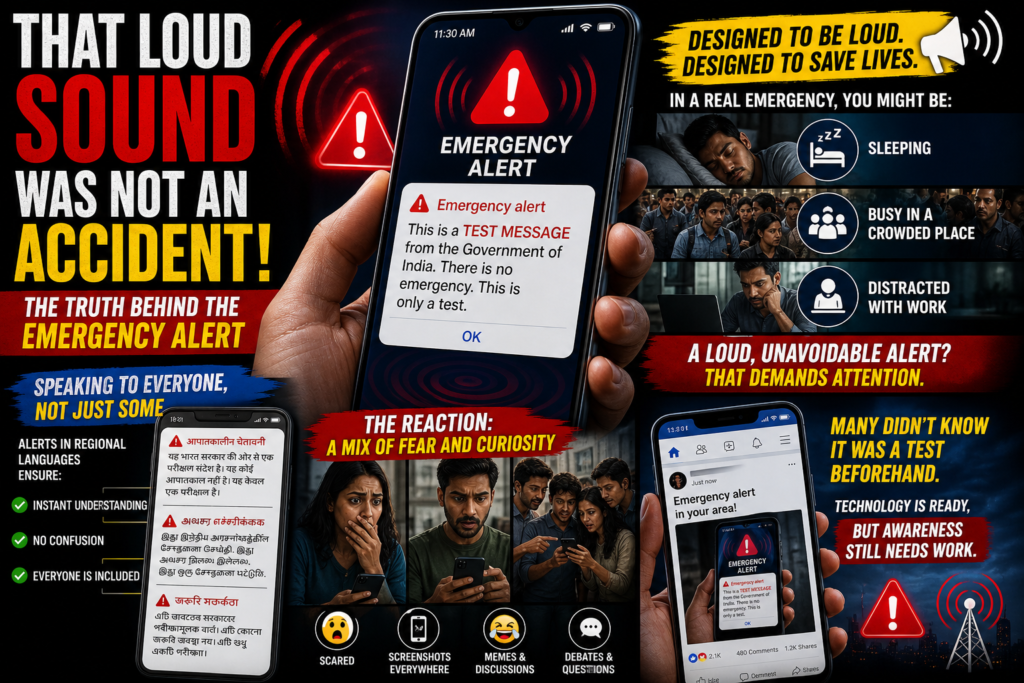
Let’s be honest – that alert sound was intense.it cut through everything. it didn’t matter if your phone was on silent or in your pocket, that’s because emergency alerts are designed to do exactly that.
In a real – life scenario, you might be:
- Sleeping
- Busy in a crowded place
- Distraction with work
A normal notification wouldn’t be enough. It might go unnoticed.
But a loud, unavoidable alert? That demands attention.
It’s not meant to be comfortable – it’s meant to be effective.
Speaking to Everyone, Not Just Some :
Another thing many people noticed was that the message appeared in regional languages
By sending alerts in local languages, the system ensures that:
- People understand the message instantly
- There is no confusion
- Every, regardless of background, is included
This small detail can save lives.
The Reaction: A Mix of Fear and Curiosity:
As expected, the alert triggered strong reactions.
Some people were genuinely scared. Others quickly turned to social media, asking if anyone else had received the same message. within minutes, screenshots started circulating everywhere.
There were memes, discussions and even debates.
But beneath all that, one thing stood out – many people didn’t know it was a test beforehand.
This shows that while the technology is ready, public awareness still needs work.
Why Awareness Matters Just as Much as Technology:
Even the best system in the world won’t help if people don’t understand it.
Imagine receiving a real emergency alert and ignoring it because you think it’s just another test. Or panicking unnecessarily because you don’t know what it means.
That’s why awareness is crucial.
People need to know:
- What different alert levels mean
- How to respond quickly
- When to take action and when not to
Simple awareness campaigns, school education and media announcements can make a big difference.
Prepared people respond better – and faster.
What About Privacy?
Whenever something new appears on our phones, privacy concerns naturally follow.
Many people is reassuring – no.
Cell Broadcast does not:
- Track your location individually
- Collect personal data
- Identify users
It simply sends a message to all devices in a certain area. It’s like a public announcement, not a surveillance tool.
India is Catching Up Globally:
India isn’t the first country to use such systems.
Countries like the United States, Japan and several in Europe already rely on similar technologies for emergency alerts.
For example:
- The US has Wireless Emergency Alerts(WEA)
- Japan uses advanced earthquake warning systems
By adopting Cell Broadcast, India is stepping into a global standard of disaster preparedness, and given the country’s size and diversity, this step is both necessary and timely.
Final Thought:
That sudden, loud “Extremely Severe Alert” might have lasted only a few seconds, but it left a lasting imppression.
It reminded us of something important:
- Disasters don’t come with warning- but now maybe they can.
- And when that moment comes, being prepared could make all the difference
2 thoughts on “India’s “Extremely Severe Alert”: A Wake-up Call We Didn’t Expert”