

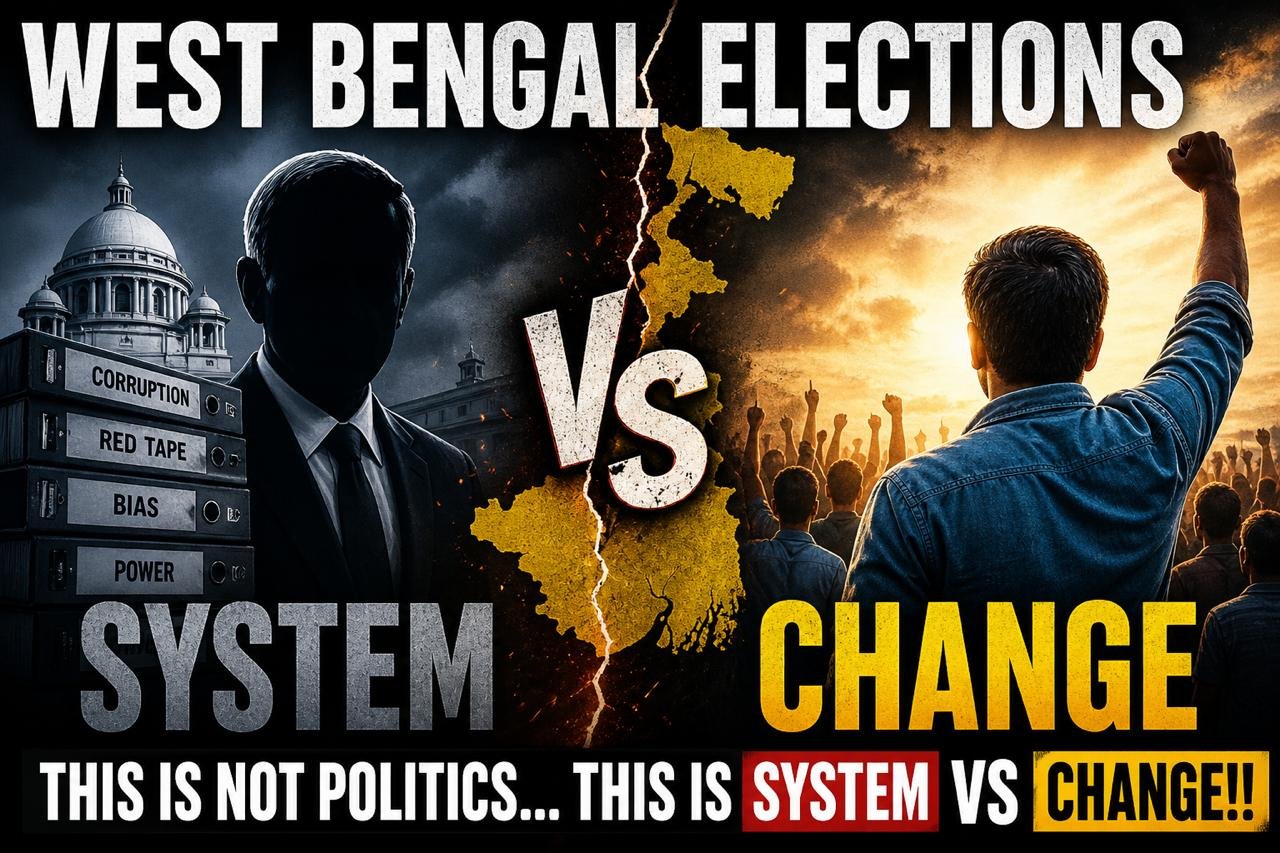
West Bengal Elections 2026: A Story of People, Power, and Passion
The 2026 West Bengal Assembly election were not just another political event-they felt more like a festival of democracy. Across cities, towns, and villages, people stepped out of their homes early in the morning, standing patiently in long queues under the sun, all with one shared purpose: to vote and shape the future of their state.
For many, this election was personal. It wasn’t only about political parties or leaders-it was about jobs, safety, identity, and hope for a better tomorrow.
West Bengal Elections.!! This is not politics….This is System vs Change!!
A State That Loves Politics
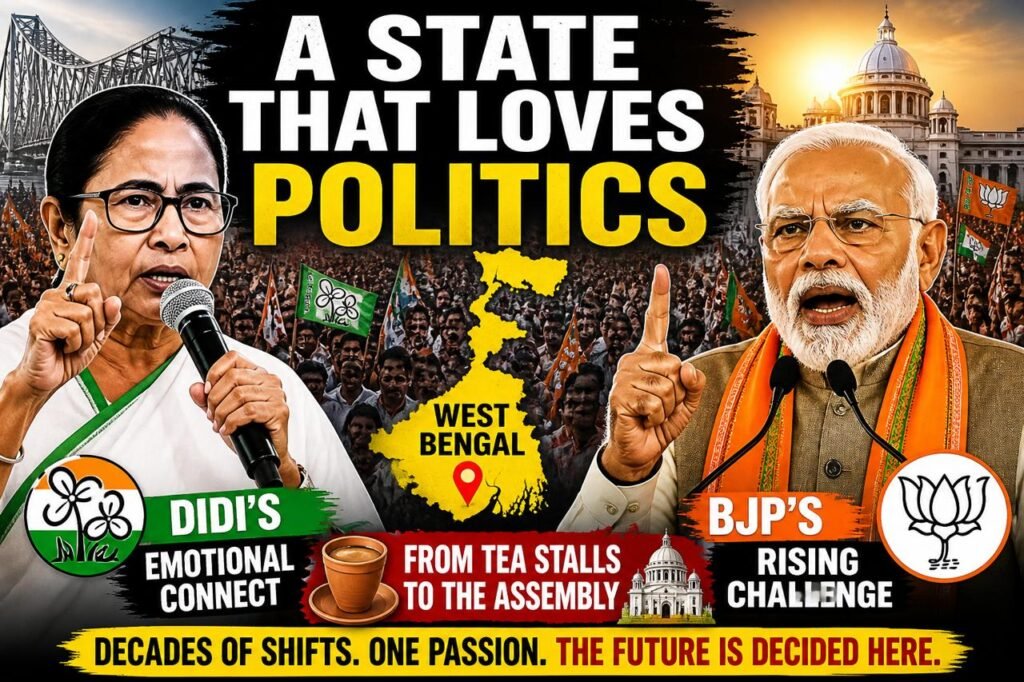
West Bengal has always been deeply political. Conversation about governance and leadership are common in tea stalls, marketplaces, and even family gatherings. For decades, the state has seen dramatic political shifts-from Left rule to the rise of Mamata Banerjee and her party, the All India Trinamool Congress (TMC).
Since coming to power in 2011, Mamata Banerjee-often called “Didi”-has built a strong emotional connection with many voters. Her leadership style, rooted in grassroots politics, continues to appeal to large sections of society, especially women and rural communities.
But over the years, a new challenger has steadily grown stronger-the Bharatiya Janata Party (BJP). What was once a minor player in the state has now become a major force, turning elections into intense head-to-head battles.
Click here for Tamil Nadu Election
The Build-Up: Energy Everywhere
As the election dates approached, the energy across West Bengal was impossible to ignore. Streets were filled with party flags, posters, and loudspeakers playing campaign songs. Leaders addressed massive rallies, while local candidates went door-to-door trying to connect with voters.
On one side, Mamata Banerjee campaigned on her government’s achievements-highlighting welfare schemes, support for women, and improvements in rural infrastructure. Her speeches often focused on protecting Bengal’s identity and culture.
On the other side, the BJP, led in the state by Suvendu Adhikari, presented itself as a strong alternative.The party spoke about development, corruption, and the need for change. Their message was clear: it was time for a new chapter.
Meanwhile, Parties like the Indian National Congress and the Left tried to regain lost ground, but much of the spotlight remained on the TMC vs BJP contest.
Voting Days: Democracy in Action

When voting finally began on April 23 and April 29.the response from people was overwhelming. From first-time voters to elderly citizens, everyone showed up with enthusiasm.
Polling booth saw long lines from early morning. In rural areas, people walked kilometers to cast their votes. In cities, young voters proudly shared photos with inked fingers on social media.
The turnout was incredibly high-one of the highest in the state’s history. It showed that people truly cared about who would lead them for the next five years.
The Real Issues on People’s Minds
Behind all the slogans and speeches, voters had real concerns.
- Jobs and Livelihoods: Many young people were worried about employment opportunities.
- Women’s Safety and Welfare: Government schemes had helped many, but expectations were still high.
- Corruption: Allegation and counter-allegations became a major talking point.
- Law and Order: Safety and political violence were discussed widely.
- Identity and Pride: For many voters, protecting Bengal’s culture was just as important as economic development.
Different voters prioritized different issues, but everyone wanted progress.
High-Profile Battlegrounds
Certain constituencies drew extra attention because of the big names involved.
Nandigram remained one of the most talked-about seats due to its political history and rivalry. Bhabanipur, closely associated with Mamata Banerjee, carried sysmbolic importance. Urban constituencies like Asansol and Baharampur also became key battlegrounds.
These seats weren’t just about winning-they represented prestige, influence, and momentum.
Tensions and Controversies
Like many heated elections, this one also saw its share of tensions. There were reports of clashes between party workers, heated arguments, and allegation of unfair practices.
In some areas, concerns about voter intimidation and irregularities led to repolling. While these incidents raised questions, authorities worked to maintain order and ensure that the election process remained fair.
Despite the challenges, the overall spirit of the election remained strong.
What People Are Expecting
As voting ended, the focus shifted to the results. Exit polls gave mixed predictions-some suggested a close fight, while othere hinted at a clear winner.
But on the ground, opinions were divided. Some voters felt confident that the TMC would continue its rule, while others believed the BJP could achieve a breakthrough.
There was also quiet speculation about a hung assembly, though many hoped for a decisive result.
More Than Just an Election
What makes the West Bengal elections special is the emotional connection people have with politics. For many voters, choosing a leader is not just a decision-it’s a reflection of their beliefs, identity, and aspirations.
A win for the TMC would mean continuity and trust in Mamata Banerjee’s leadership. A victory for the BJP would singnal a major shift and the beginning of a new political era in the state.
Either way, the result will shape not just policies but also the political mood of the country.
The Final Word
The 2026 West Bengal Assembly elections have once again shown the strength of democracy. From passionate debates to record-breaking turnout, the people of the state have made their voices heard loud and clear.
Now, as everyone waits for the final results, there is a sense of anticipation in the air. the streets may be quieter, but the conversations continue-about what comes next, who will lead, and how the future will unfold.
Because in West Bengal, politics is not just about power.
The 2026 elections in West Bengal also highlighted the growing role of youth participation and digital campaigning in shaping political narratives. Social media platforms became powerful tools for outreach, enabling parties to directly engage with first-time voters and urban audiences. At the same time, grassroots campaigning remained crucial in rural areas, where personal connections and regional development dominated conversation among young voters. As political awareness increases, the electorate in West Bengal is becoming more dynamic, informed, and vocal, making future elections even more competitive and closely contested.
The West Bengal Elections 2026 results are NOT declared yet-the are being counted today (May 4, 2026)
1 thought on “West Bengal Elections.!! This is not politics….This is System vs Change!!”