

When Grief Becomes a Voice: The Story Behind Ratna Devnath’s Victory in Panihati
Elections are often described in number-votes counted, seats won, margins calculated. But every once in a while, a result comes along that cannot be understood through numbers alone. it carries emotion, memory, and a deeper human story. The recent victory of Ratna Devnath in Panihati during the West Bengal Assembly Elections 2026 is one such moment.
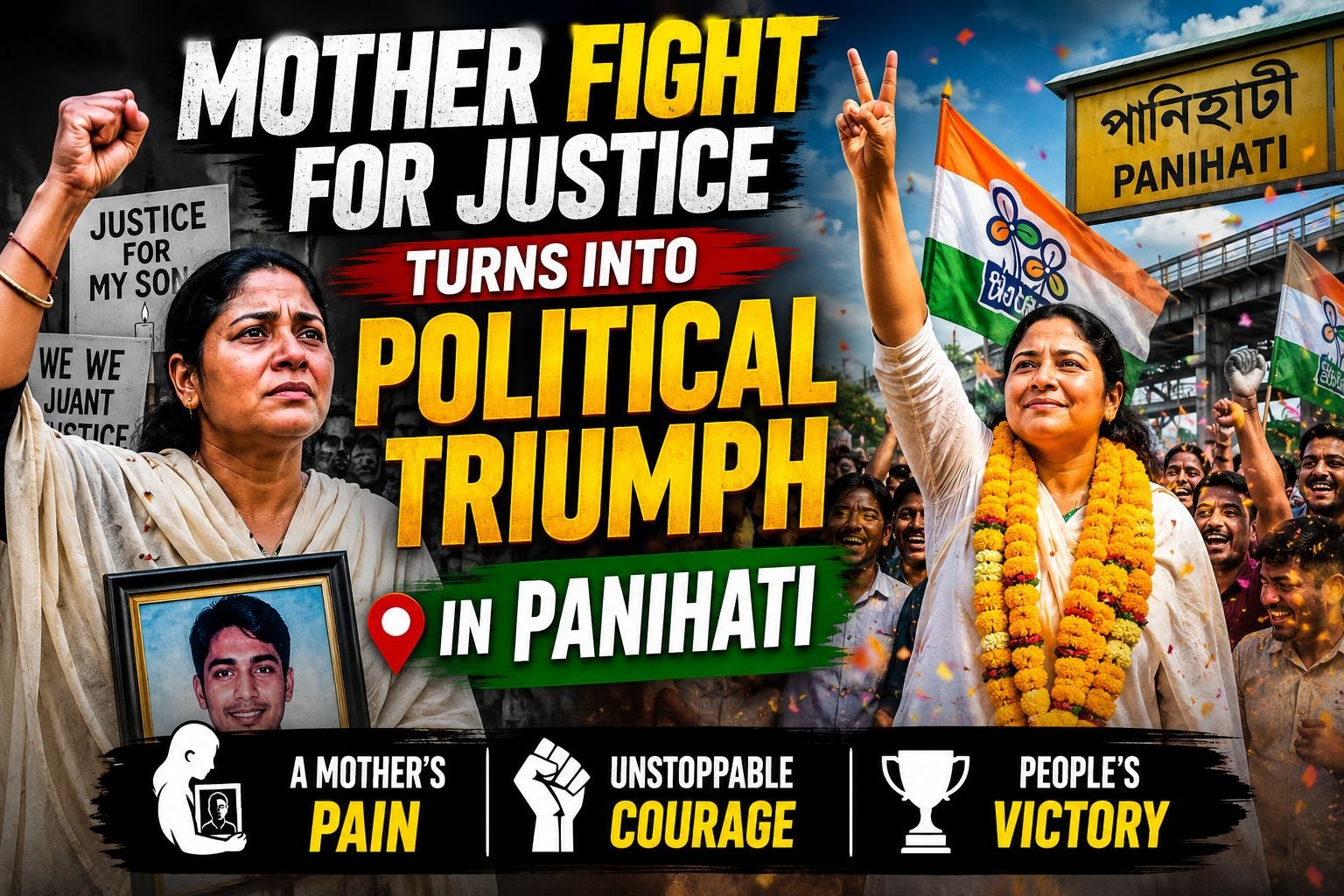
“Mother’s Fight for Justice Turns into Political Triumph in Panihati”
This is not just a political story. It is a story of loss, courage, and the quiet strength of a mother who chose not to remain silent.
A Mother’s Pain That Reached the Public
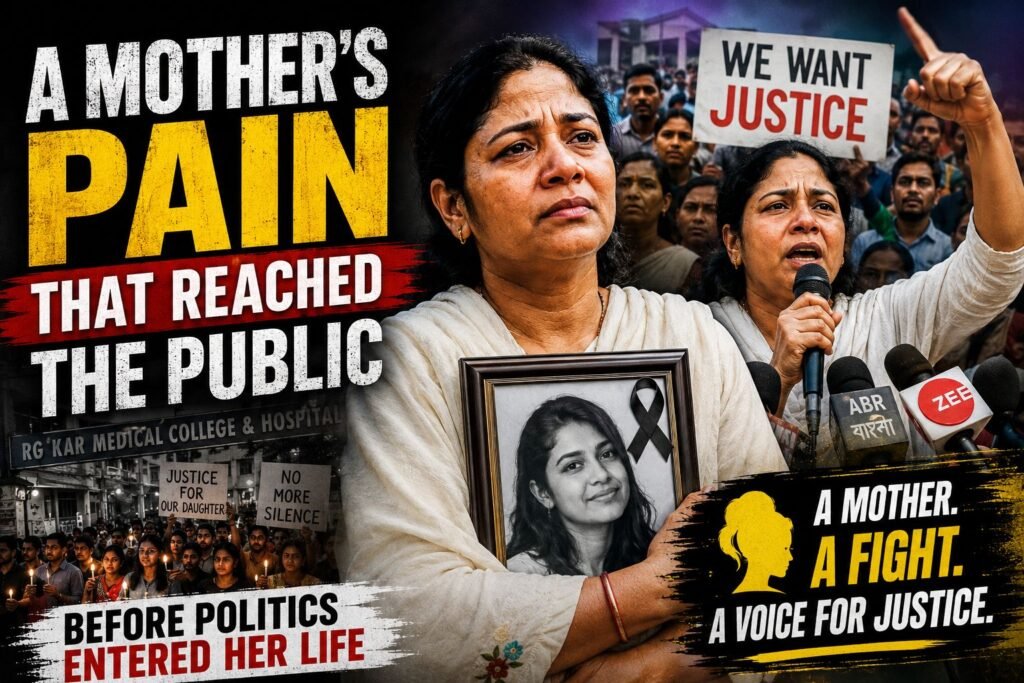
Before politics entered her life, Ratna Devnath was known for something no parent ever wants to be known for-being the mother of a victim. Her daughter’s connection to the tragic case linked with RG Kar Medical College and Hospital shook many people across Kolkata and beyond.
For most families, such a loss leads to a lifetime of quiet grief. The world moves on, but their pain remains. Ratna Devnath, however, chose a different path. Instead of letting her daughter’s story fade into memory, she carried it into the public space. Her voice, filled with both sorrow and determination, began to resonate with people who saw in her struggle something deeply familiar-the desire for justice.
Her journey was not planned. She did not grow up dreaming of becoming a politician. There were no early speeches, no political ambitions. What pushed her forward was something far more powerful: a sense that her daughter’s story deserved to be heard, and that change was necessary.
Stepping into Politics-An Unlikely Decision
When Ratna Devnath decided to contest elections as a candidate of the Bharatiya Janata Party, many were surprised. Politics is often seen as a space dominated by experienced leaders, long-time party workers, and strategic planners. She was none of those.
But sometimes, what people connect with most is not experience-it is authenticity.
Her campaign did not follow the usual script. There were no overly polished speeches or complicated promises. Instead, there was honesty. She spoke as a mother, not as a politician. She spoke about loss, about justice, and about the fear that many families quietly carry regarding the safety of their daughters.
And people listened.
Panihati: A Tough Ground to Win
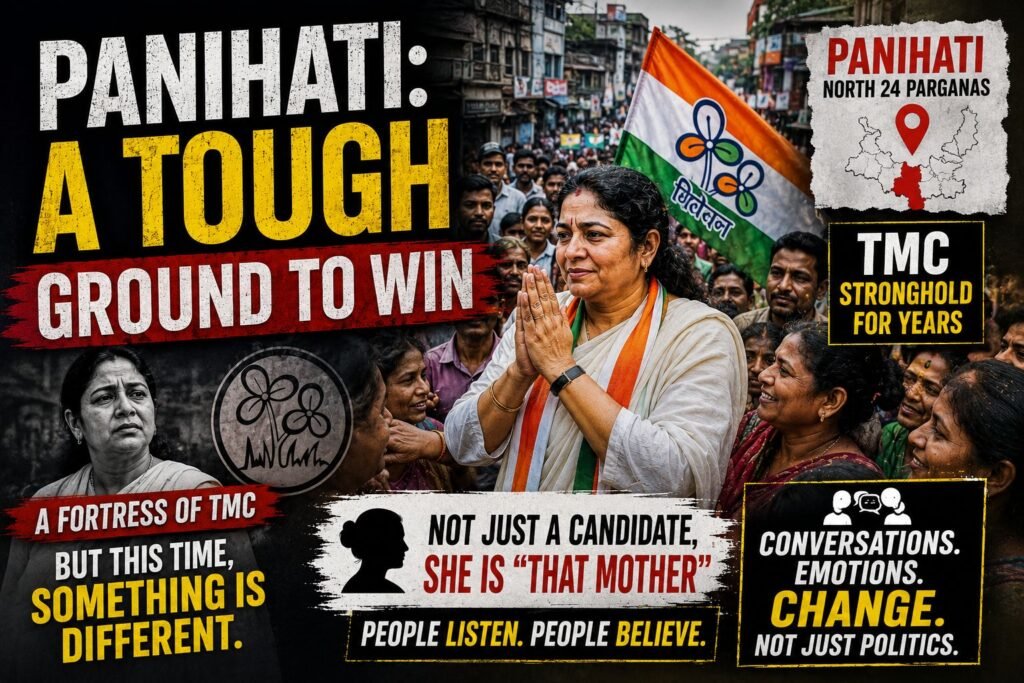
The Panihati Assembly constituency in North 24 Parganas has long been considered a stronghold of the All India Trinamool Congress. For years, the party’s presence there seemed unshakable.
In such places, elections often feel predictable. Voters are used to familiar faces, familiar slogans, and familiar outcomes. Breaking that pattern is never easy.
Yet, something about this election felt different.
As Ratna Devnath moved through neighborhoods, meeting people face-to-face, her story began to spread-not through advertisements, but through conversations. People spoke about her not as a candidate, but as “that mother.”And in that simple description, there was both sympathy and respect.
Her campaign slowly turned into something more than a political effort. It became a reflection of public emotion.
A Campaign Rooted in Real Feelings
Unlike many campaigns that focus on infrastructure, development statistics, or party rivalries, Devnath’s comparing was deeply personal.
She spoke about justice-not as a slogan, but as a lived experience. She spoke about women’s safety-not as a policy issue, but as a daily concern for families. Her words did not feel distant or rehearsed. They felt real.
At her rallies, there was often a silence when she spoke-a kind of attentive quiet that is rare in political gathering. People were not just hearing her; they were feeling what she was saying.
Women, especially, seemed to connect with her message. Many saw in her a reflection of their own fears and hopes. Younger voters, too, responded strongly, drawn by the sincerity of her voice.
Her campaign reminded people of something simple yet powerful: politics is not just about governance-it is about people’s lives.
The Moment of Victory

When the counting began, few expected a dramatic shift. Panihati had its history, and history often repeats itself.
But as the number started coming in, it become clear that something unusual was happening.
Ratna Devnath was leading.
With each round of counting, her lead held strong. What had once seemed unlikely was now becoming real. A constituency known for its political consistency was witnessing change.
For her supporters, it was a moment of joy. For many observers, it was a moment of reflection. And for Ratna Devnath herself, it was likely something far more comeplex mix of relief, gratitude, quiet memory of why she began this journey in the first place.
More Than Just a Political Win
it would be easy to describe her victory as a political upset. But that would miss the deeper meaning behind it.
This result is not just about one candidate defeating another. It is about how personal stories can shape public decisions. It is about how voters are willing to step beyond party lines when they fell a genuine connection.
Her victory shows that people are not only looking for leaders-they are looking for voices they can trust.
It also highlight a growing awareness around issues like women’s safety and justice. These are no longer topics that remain in the background. They are becoming central to how people think about governance and leadership.
A Message to Political Parties
For political parties, this result carries an important message.
For the BJP, Ratna Devnath’s win offers both a symbolic and strategic advantage. It shows that even in challenging regions, the right candidate with the right message can make an impact.
For the TMC, losing a traditional stronghold may prompt reflection. It suggests that local sentiment and individual stories can sometimes outweigh established political structures.
More broadly, this election reminds all parties that voters are paying attention-not just to what is promised, but to who is speaking.
Conclusion
In the end, the Panihati result is more than a change in leadership. It is a reflection of how deeply people can connect with honesty and courage.
Ratna Devnath’s victory in the West Bengal Assembly elections 2026 shows that even in a system driven by strategy and structure, there is still space for humanity.
It shows that a mother’s voice can become a public force.
It shows that voters are willing to listen.
And perhaps most importantly, it shows that change often begins with something very simla decision not to stay silent.
In a world where politics can sometimes feel distant and impersonal, this story brings it back to where it truly belongs: with the people.
1 thought on ““Mother’s Fight for Justice Turns into Political Triumph in Panihati””