

National Animal controversies ( 2025-2026 ) : Politics, Culture, and Conservation in the Spotlight
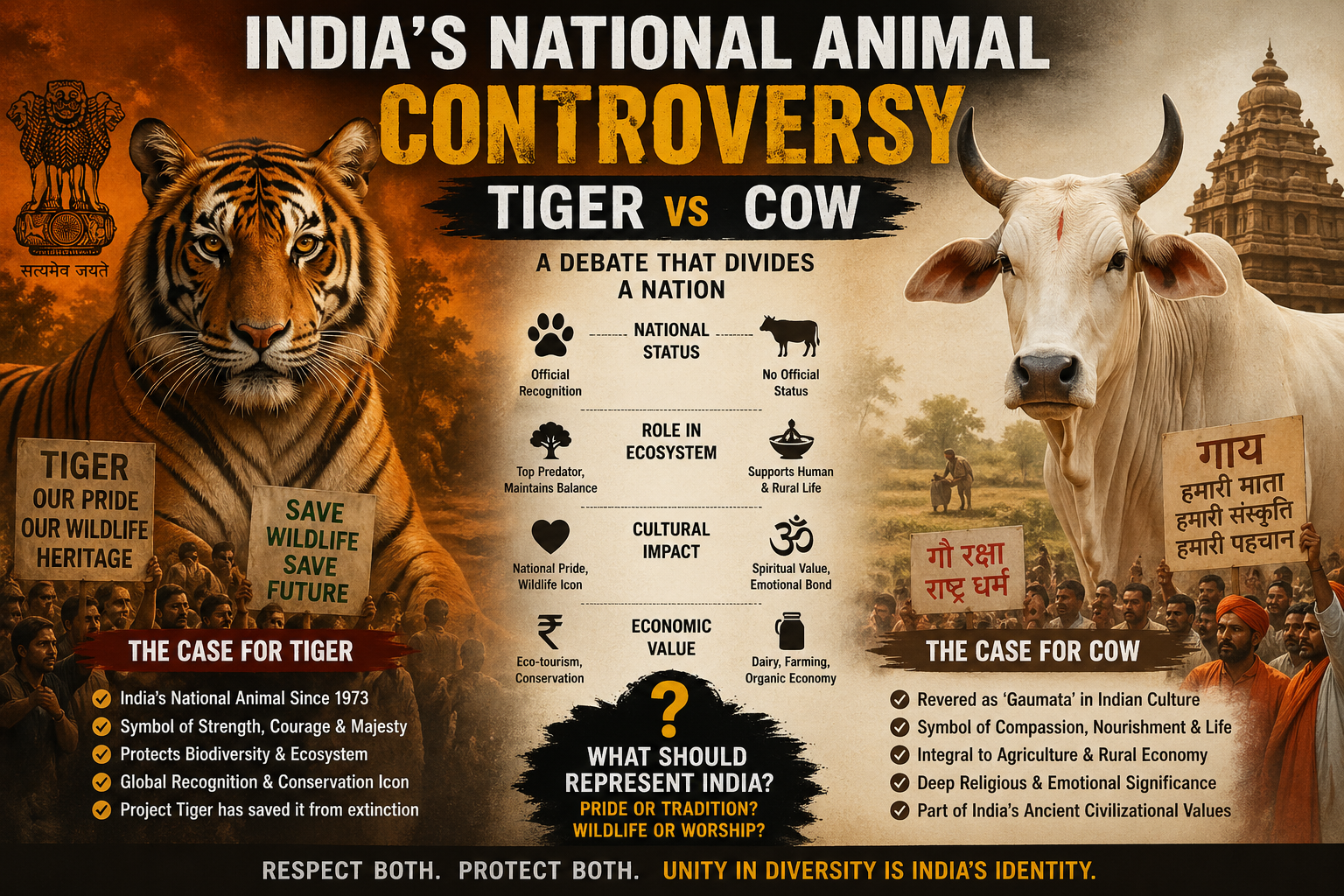
National animals are not just wildlife symbols. They are powerful identities that represent a nation’s pride, history, culture, and natural heritage. But in recent years, especially during 2025-2026, especially during 2025-2026, many countries have witnessed serious debates and controversies related to their national animals. ” National Animals, National Debates: The Controversies Shaking 2025-26 ” this title tells how the conflicts and debates were going on in India.
From political discussion to conservation failures, from religious emotions to environmental conflicts, national animals have become part of trending news and heated public opinion.
Why National Animals Are Becoming Controversial in Recent Times
For decades, national animals were considered untouchable symbols. They were proudly mentioned in textbooks, displayed in government logos, and celebrated on national occasions. However, the modern world is changing fast.
Today, national animals are linked with:
- Political identity
- Religious and cultural benefits
- Wildlife conservation issues
- Human-wildlife conflict
- Tourism and economic interests
- Environmental crisis and habitat destruction.
That is why national animals are no longer just symbols. They have become part of national debates and controversies.
- India’s National Animal Controversy ( Tiger vs Cow )Debate
When we talk about recent national animal controversies, India is one of the biggest examples.
Why Did This Debate Start?
Supporters of the cow argue that:
- The cow is sacred in Hindu culture.
- Changing the national animal is not necessary.
- This debate may create religious and political forests and preventing tiger poaching.
This controversy gained attention on social media and news platforms, with hashtags and debates dividing public opinion. Many environmentalists also warned that such debates can distract the country from real conservation needs like protecting forests and preventing tiger poaching.
This controversy proved one thing : India’s national symbols are emotionally powerful, and changing them is never simple.
2. Tiger Conservation Controversy: Are Tigers Really Safe ?
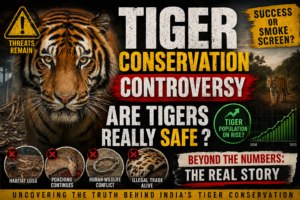
Even though India celebrates tiger conservation programs like Project Tiger , many recent reports have highlighted increasing threats.
The Main Issues
- Tiger habitat shrinking due to development projects.
- Increasing conflict between tigers and villagers.
- Rising fear among rural communities living near forests
- Illegal wild life trade and poaching.
In some areas, villagers have protested against forest restriction, claiming they lose land and safety due to tiger protection policies.
This creates a painful question:
Is the tiger protected more than the people living near it ?
This debate is one of the biggest modern wild life controversies, because both sides have real struggles.
3. Nepal’s National Animal Pride Turning Into Conflict
Nepal’s national animal is the cow, but Nepal is also famous for tiger conservation and wildlife tourism. Recently, Nepal faced growing concerns regarding human-tiger conflict.
In certain areas, tigers have attacked livestock and sometimes humans. This has led to:
- Fear among farmers
- Demand for government action
- Controversy over whether tiger population growth is being managed properly
Wildlife conservations argue that Nepal is doing well in protecting endangered species. But local villagers argue that they are paying the price for conservation success.
4. Botswana Elephant Controversy: Protection vs Hunting Debate

Botswana is known for having one of the largest elephant population in Africa. Elephants are not only a wildlife treasure but also a strong national identity symbol.
However, Botswana has recently faced international controversy due to debates on elephant hunting.
Why Was It Controversial ?
Some government authorities and communities argued that:
- Elephant numbers are too high.
- Elephants destroy crops and villages.
- Controlled hunting can manage the population.
But conservation groups and animal rights activists argued that :
- Hunting elephants is cruel and unnecessary.
- Elephants are intelligent and emotional animals.
- Tourism brings more money than hunting.
This created global outrage because elephants not just animals they are symbols of wisdom and heritage.
Botswana’s elephant debate shows the struggle between economic survival and wildlife ethics.
5. Thailand’s Elephant Controversy : Tourism and Animal Rights
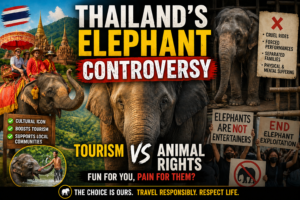
Thailand’s national animals is the elephant, and elephants are deeply connected to Thai history, royal traditions, and tourism.
But in recent years , Thailand has faced criticism due to elephant exploitation in tourism.
Many tourists love riding elephants and taking selfies. But animal welfare organizations have raised serious concerns, stating that:
- Elephants are forced into training.
- Chained for long hours .
- Treated harshly to entertain tourists.
This controversy has forced Thailand to rethink elephant tourism .
Now, many elephant camps have shifted toward ” ethical tourism, ” allowing visitors to feed and observe elephants instead of riding them.
This is an important example of how national animals are becoming controversial due to modern tourism culture .
6. India’s Cheetah Reintroduction Controversy: Conservation or Publicity ?
One of the biggest wildlife headlines in recent years was India’s cheetah reintroduction project. Though cheetahs are not India’s national animal, they are still symbolic wildlife.
India brought African cheetahs into protected parks to restore a species that became extinct in India decades ago.
Why Did It Become Controversial ?
Supporters said :
- It is a historic conservation mission.
- It can boost biodiversity.
- It will increase eco-tourism.
Critics argued:
- India lacks enough open habitat for cheetahs.
- Some cheetahs died, raising concerns.
- The project feels more like political branding than real ecology.
This created a major debate between scientists and policymakers.
Many people asked :
Is wildlife conservation being used for publicity?
This controversy became a major topic in environmental journalism and social media.
7. The Lion Controversy : Trophy Hunting and Global Outrage
In many African countries, the lion is considered a national pride symbol, and in some places, it is closely tied to national identity.
But lion trophy hunting continues to remain controversial worldwide.
The debate is emotional because lions represent:
- Courage
- Leadership
- Heritage
Supporters of regulated hunting argue it provides revenue for conservation and local communities. Critics argue that killing lions for sport is immoral.
This controversy remains one of the biggest ethical debates in wildlife politics, because it forces the world to decide:
Can money justify killing a national symbol?
Conclusion: National Animals Are Not Just Symbols, They Are Responsibilities
The recent national animal controversies in 2025-2026 clearly show that national animals are more than wildlife. They are connected to identity, pride, emotions, politics, and the environment.
From India’s tiger vs cow debate to Thailand’s elephant tourism issues, from Botswana’s hunting controversy to global lion protection debates, one truth is clear:
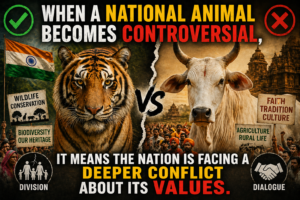
When a national animal becomes controversial, it means the nation is facing a deeper conflict about its values.
The world is now realizing that national animals are not only meant to be admired-they are meant to be protected, respected, and understood.
Because in the end, the way we treat our national animals reflects the way we treat our future.