

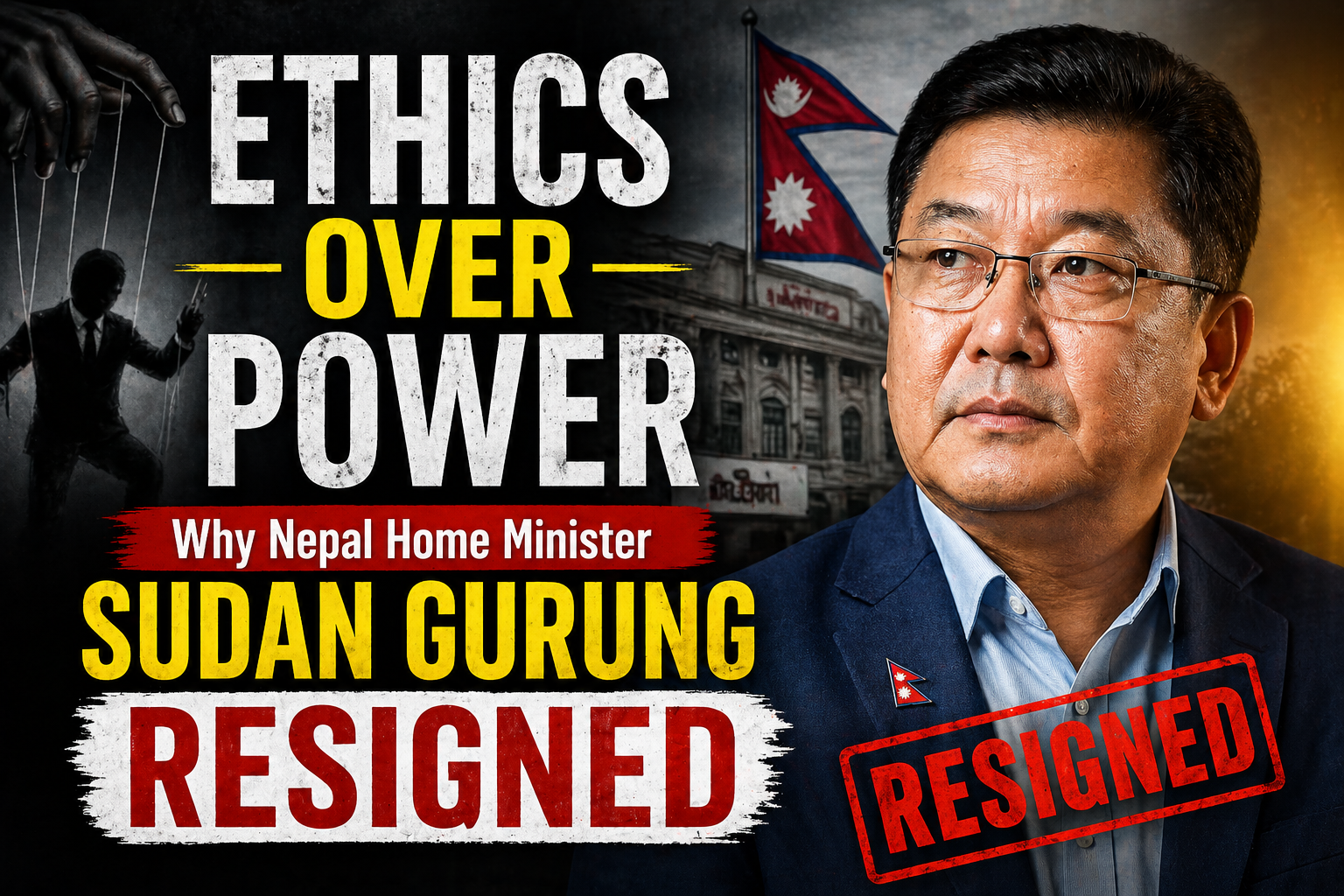
“Ethics Over Power”: Why Nepal Home Minister Sudan Gurung Resigned – A Deep Dive into Nepal’s Political Shake-UP
In the ever-evolving landscape of Nepal politics, moments of sudden change often reveal deeper truths about leadership, accountability, and public trust. One such moment unfolded recently when Nepal’s Home Minister, Sudan Gurung, stepped down from his powerful position just weeks after assuming office. His resignation, accompanied by the striking phrase “ethics over power,” has sparked national debate and drawn global attention.
But what really happened? Why would a rising political figures give up one of the most influential roles in government so quickly? And what does this mean for Nepal’s future?
Who Is Sudan Gurung? A New Face of Nepal’s Changing Politics
Sudan Gurung was not just another politician climbing the ladder. He represented something different- a new generation of leaders in Nepal who emerged from activism rather than traditional power structures.
Young, outspoken, and deeply connected with grassroots movements, Gurung became popular during Nepal’s youth-led protects demanding transparency, job opportunities, and an end corruption. His rise symbolized hope for many citizens tried of the same old political patterns.
When he was appointed Home Minister under Prime Minister Balen Shah’s reform focused government, expectation soared. people believed Gurung would bring bold reforms, shake up outdated systems, and restore trust in governance.
For a moment, it seemed like Nepal was entering a new political era.
A Powerful Role, A Short Tenure
The Home Minister in Nepal is not just another cabinet member. This role oversees internal security, law enforcement, and crucial administrative functions. It requires not only political vision but also immense responsibility and integrity.
Gurung wasted no time making his presence felt. His early decisions were bold-some would say controversial. he initiated investigations, pushed for accountability, and made it clear that his leadership style would be direct and uncompromising.
However, in politics, the spotlight doesn’t just shine on decisions-it also exposes personal history.
And that’s where things began to unravel.
The Controversy That Changed Everything
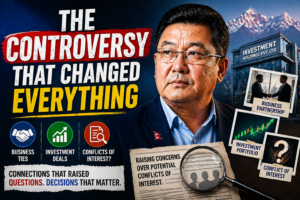
Shortly after taking office, allegation surfaced regarding Gurung’s financial dealings. Reports suggested that he had connections to certain business investments that raised concerns about potential conflicts of interest.
While there was no immediate legal conviction or proven wrongdoing, the optics were troubling-especially for government that had built its identity around transparency and anti-corruption.
Critics began questioning:
- Were Gurung’s financial interests fully disclosed?
- Did his business connections compromise his ability to act impartially?
- Could he lead investigation into corruption while facing such questions himself?
Public pressure grew rapidly. In today’s digital age, social media amplified every accusation, every rumor, and every demand for accountability.
Suddenly, Gurung was no longer just a reformist leader-he was at the center of a credibility crisis.
“Ethics Over Power”: The Decision to Resign
In a move that surprised many but also earned respect, Sudan Gurung chose to resign.
His message was simple yet powerful:
“Ethics is greater than position. Public trust come first.”
This wasn’t a forced removal. it wasn’t a political defeat in the traditional sense. It was conscious decision to step aside to ensure that investigations-if any-could proceed without influence or doubt.
In a political culture where leaders often cling to power despite controversies, Gurung’s resignation stood out.
It raised an important question:
Is this the beginning of a new standard in Nepalese politics?
Public Reaction: Divided but Engaged
The response from the public has been anything but uniform.
Supporters Say: A Rare Act of Integrity
Many citizens praised Gurung’s decisions as a sign of maturity and ethical leadership. For them, stepping down voluntarily showed respect for democratic values and public trust.
They argue that:
- He set an example for other leaders
- He prioritized the country over personal ambition
- He strengthened the idea of accountability in governance
Critics Say: Too Little, Too Late
Others however, were less forgiving. They questioned why the issues weren’t addressed before his appointment.
Some critics believe:
- Proper vetting should have prevented this situation
- The resignation highlights flaws in the government’s selection process
- It damages the credibility of reform-driven politics
In essence, while Gurung’s exit may have been ethical, it also exposed systematic weaknesses.
Impact on Nepal’s Government
For Prime Minister B Shah, this resignation is more than just a cabinet change- it’s a political test.
The government which came to power promising reform and transparency, is now under scrutiny. Losing a key minister so early creates uncertainty and raises doubts about stability.
Consequences include:
- Leadership Gap: The Home Ministry is critical; any disruption affects governance.
- Public Pressure: Opposition parties are likely to use this moment to challenge the government’s credibility.
- Public Confidence: Early controversies can erode trust in a new administration
At the same time, how the government responds will shape its future.
Will it double down on transparency?
Or will this become another example of lost momentum?
What This Means For Nepal’s Political Future
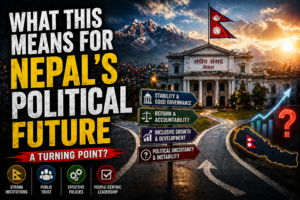
Sudan Gurung’s resignation is not just about one individual- it reflects a broader shift in Nepal’s political culture.
Here are some takeaways:
- Accountability Is No Longer Optional
Citizens are more aware, more vocal, and less tolerant of ethical lapses. Leaders are being held to higher standards than ever before.
2. Transparency Must Be proactive
It’s no longer enough to respond to allegation-leaders must ensure complete transparency from the beginning.
3.Youth Leadership Faces Unique Challenges
While young leaders bring fresh energy, they also face intense scrutiny. Their credibility must be airtight to sustain public trust.
4. Symbolism Matters
Gurung’s phrase “ethics over power“ may resonate far beyond this incident. it could influence how future leaders approach responsibility and accountability.
A Human perspective: Powe, Pressure, and Principles
At its core, this story is deeply human.
Imagine stepping into one of the most powerful roles in your country, carrying the hopes of million-only to face sudden scrutiny that question your integrity.
Conclusion: A Turning Point or Just Another Political Episode?
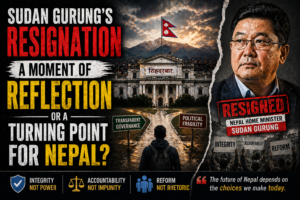
Sudan Gurung’s resignation after just weeks in office may seem abrupt, but it reflects broader currents sweeping through Nepalese society demands for integrity, accountability, and genuine reform. Weather this moment becomes a turning point toward more transparent governance, or a cautionary tale of political fragility, only history will judge.
For now, the world watches as Nepal navigates the aftermath if this resignation, seeking stability, strength, and a future that lives up to high ideals many of citizens-especially its youth-continue to champion.