

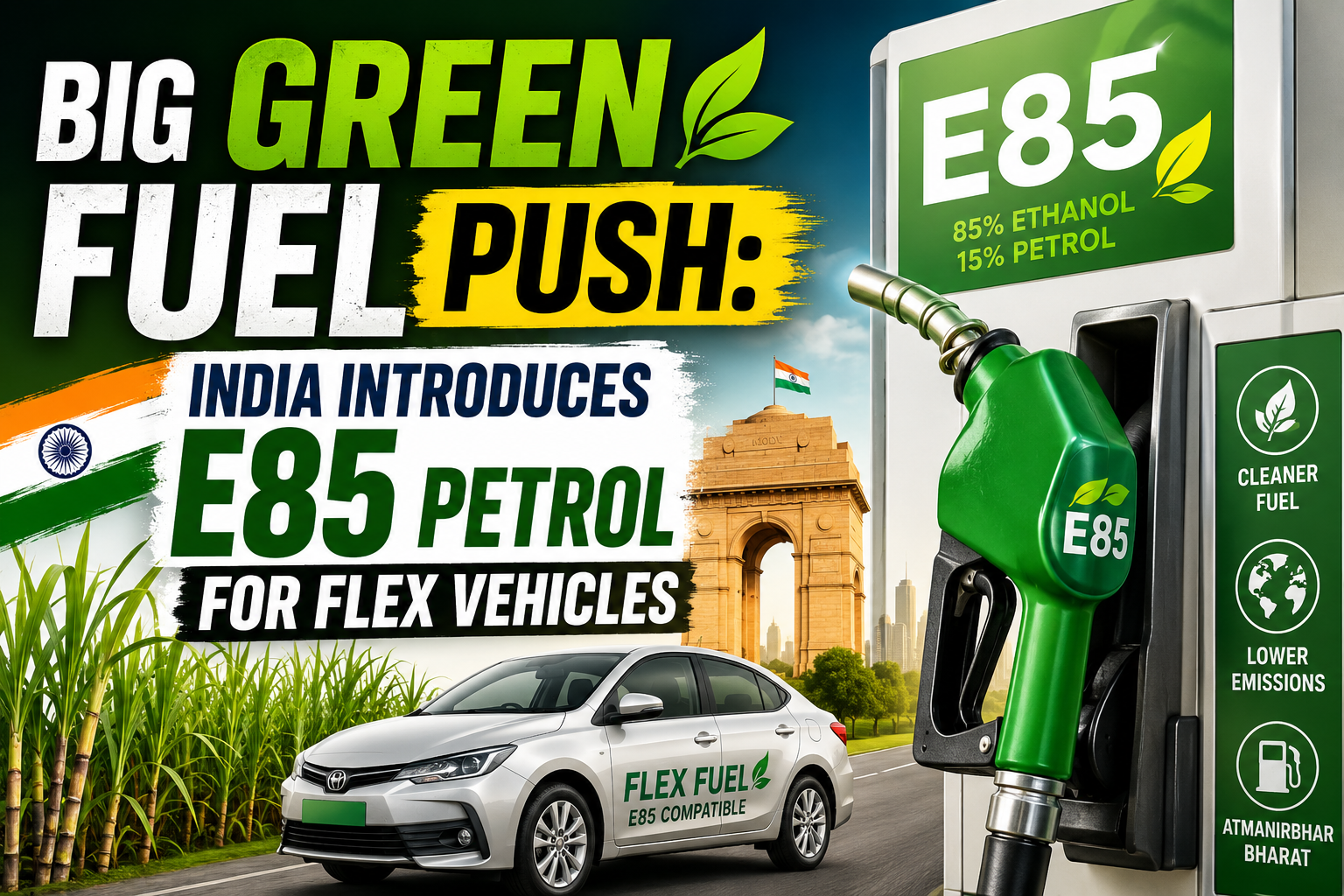
E85 Fuel Launch in India: Hardeep Singh Puri Unveils 85% Ethanol-Blended Petrol for Flex-Fuel Vehicles:
India Accelerates Green Mobility with E85 Fuel Launch
India is taking another major step toward cleaner transportation and reduced dependence on imported crude oil. The country is set to officially launch E85 fuel, an ethanol-rich petrol blend containing 80% to 85% ethanol, marking a significant milestone in India’s alternative fuel journey.
Big Green Fuel Push: India Introduces E85 Petrol for Flex Vehicles.
Union Petroleum and Natural Gas minister Hardeep Singh Puri will spearhead the launch event in New Delhi, highlighting the government’s commitment to sustainable mobility and energy security. The introduction of E85 fuel comes at a time when India is aggressively pursuing biofuel adoption, carbon emission reduction, and the expansion of flex-fuel vehicle technology.
Leading automobile manufacturers such as Maruti Suzuki and Hero MotoCorp have already begun introducing flex-fuel compatible vehicles, preparing for a future where ethanol-based fuels play a much larger role in India’s transportation ecosystem.
This development could transform the country’s fuel landscape and significantly impact consumers, automakers, farmers, and the environment.
What is E85 Fuel?
E85 is a fuel blend that contains between 80% and 85% ethanol and the remaining percentage of petrol. Ethanol is a renewable biofuel produced primarily from agricultural products such as sugarcane, corn, and other biomass sources.
Unlike conventional petrol, ethanol burns cleaner and emits fewer harmful pollutants into the atmosphere. Because of its renewable nature, ethanol is considered one of the most promising alternatives to fossil fuels.
E85 fuel is specifically designed for use in Flex-Fuel Vehicles (FFVs), which are engineered to operate on varying blends of petrol and ethanol.
These vehicles can seamlessly switch between:
- Pure petrol
- E20 fuel (20% ethanol blend)
- E85 fuel
- Other ethanol-petrol combinations
This flexibility offers consumers more fuel options while supporting India’s environmental goals.
Why India is Promoting Ethanol-Based Fuels:
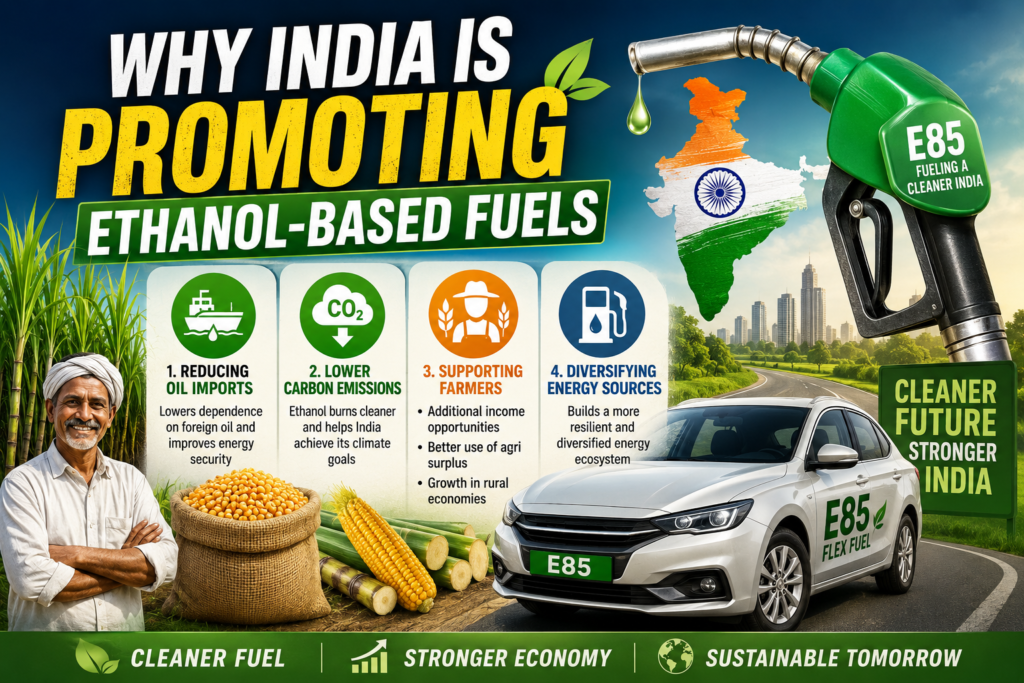
India imports a significant portion of its crude oil requirements from overseas markets. Rising global oil prices and geopolitical uncertainties often impact the country’s fuel costs.
The government believes ethanol blending can help address several key challenges:
1. Reducing oil imports
India spends billions of dollars annually on crude oil imports. Increasing ethanol usage can reduce dependence on foreign oil suppliers and improve energy security.
2. Lower Carbon Emissions
Ethanol produces fewer greenhouse gas emissions compared to conventional petrol. Widespread adoption of E85 could contribute significantly to India’s climate goals.
3. Supporting Farmers
Ethanol production creates additional demand for agricultural products such as sugarcane, maize and damaged food grains.
This provides:
- Additional income opportunities for farmers
- Better utilization of agricultural surplus
- Growth in rural economies
4. Diversifying Energy Sources
Developing biofuels helps India create a more resilient and diversified energy ecosystem.
Hardeep Singh Puri’s Vision for Ethanol Mobility:
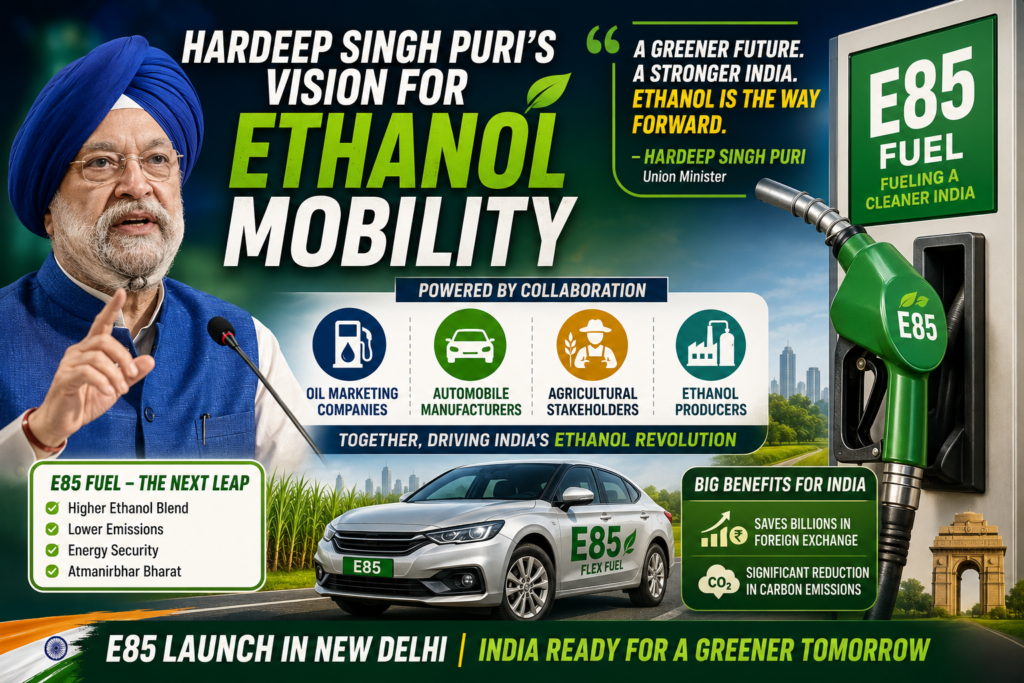
Union Minister Hardeep Singh Puri has been one of the strongest advocates of ethanol blending and alternative fuel technologies.
Over the past few years, the government has successfully increased ethanol blending percentages in petrol through coordinated efforts involving:
- Oil marketing companies
- Automobile manufacturers
- Agricultural stakeholders
- Ethanol producers
The launch of E85 fuel represents the next phase of this strategy.
According to government projections, expanding ethanol adoption could save billions in foreign exchange while significantly reducing carbon emissions.
The launch event in New Delhi is expected to showcase India’s readiness for higher ethanol blends and the infrastructure required to support them.
What are Flex-Fuel Vehicles?
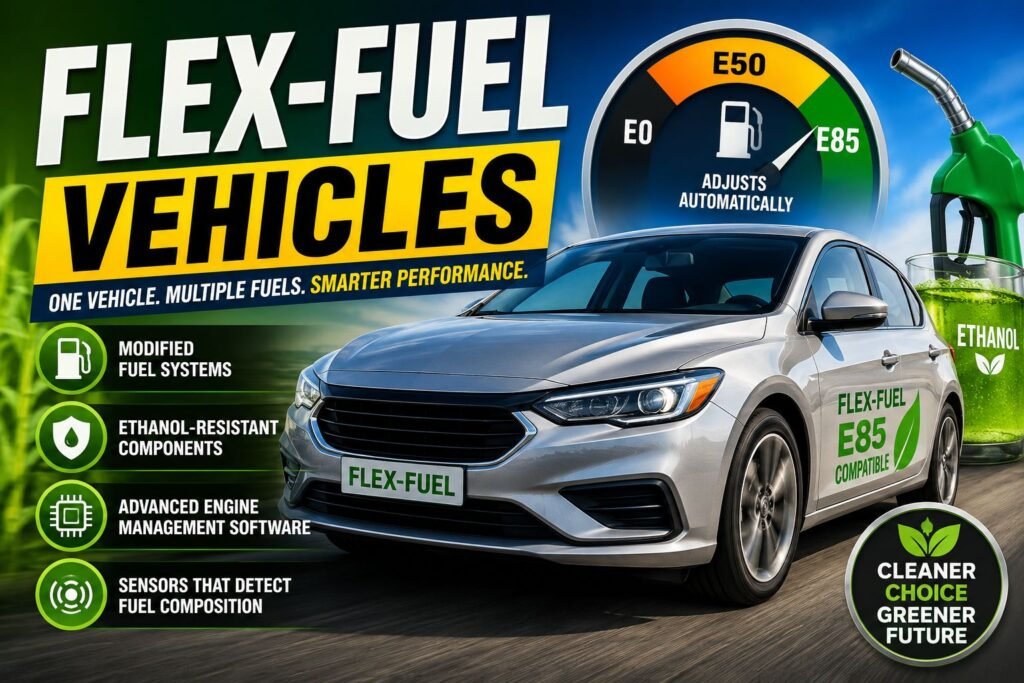
Flex-Fuel Vehicles (FFVs) are specially designed automobiles capable of operating on different ethanol-petrol mixtures.
Unlike conventional vehicles, FFVs include:
- Modified fuel systems
- Ethanol-resistant components
- Advanced engine management software
- Specialized sensors that detect fuel composition
These technologies allow vehicles to automatically adjust performance based on the fuel blend being used.
Advantages of Flex-Fuel Vehicles
Greater Fuel Flexibility
Drivers can choose among multiple fuel options depending on availability and pricing.
Reduced Environmental Impact
Higher ethanol usage results in lower carbon emissions.
Improved Energy Security
Consumers become less dependent on imported fossil fuels.
Potential Cost Benefits
If ethanol remains competitively priced, consumers may enjoy lower fuel expenses over time.
Maruti Suzuki and Hero MotoCorp Lead the Transition:
Several major automakers have already begun preparing for India’s flex-fuel future.
Maruti Suzuki
India’s largest car manufacturer has showcased and tested flex-fuel vehicle technologies. The company sees ethanol-powered mobility as a practical pathway toward reducing transportation emissions.
Maruti Suzuki has invested in developing engines capable of operating efficiently on high ethanol blends while maintaining performance and reliability.
Hero MotoCorp
India’s largest two-wheeler manufacturer has also introduced flex-fuel motorcycle variants.
Given India’s enormous motorcycle market, the adoption of ethanol-compatible two-wheelers could play a crucial role in the success of E85 fuel.
The participation of major automotive brands indicates growing industry confidence in ethanol-based mobility solutions.
How E85 Fuel Benefits the Environment:
Environmental sustainability remains one of the strongest arguments in favor of ethanol blending.
Reduced Greenhouse Gas Emissions
ethanol is produced from renewable biomass, which absorbs carbon dioxide during cultivation.
As a result, ethanol generally has a lower lifecycle carbon footprint than conventional petrol.
Cleaner Combustion:
Ethanol burns more cleanly than fossil fuels, producing fewer harmful pollutants.
This can contribute to:
- Improved urban air quality
- Reduced particulate emissions
- Lower toxic exhaust output
Support for Climate Goals
India has committed to reducing emissions intensity and achieving ambitious climate targets.
The adoption of E85 fuel supports these objectives by promoting cleaner transportation alternatives.
Challenges Facing E85 Fuel Adoption
Despite its benefits, several challenges must be addressed before E85 achieves widespread acceptance.
Infrastructure Development
Fuel stations must be equipped to store and dispense E85 fuel safely and efficiently.
Expanding nationwide availability will require significant investment.
Vehicle Compatibility
Only flex-fuel vehicles can safely operate on E85.
Many existing vehicles on Indian roads are not designed for such high ethanol concentrations.
Conclusion:
The launch of E85 fuel marks a significant milestone in India’s pursuit of cleaner, more sustainable transportation solutions. With Union Minister Hardeep Singh Puri leading the initiative and major automakers like Maruti Suzuki and Hero MotoCorp embracing flex-fuel technology, the country is moving decisively toward a biofuel-powered future.
As India balances economic growth with environmental responsibility, E85 fuel could become one of the the most important innovations shaping the future of transportation across the nation.
1 thought on “Big Green Fuel Push: India Introduces E85 Petrol for Flex Vehicles.”