

NEET-UG 2026 Controversy Sparks Protest in Delhi as Cockroach Janata Party Demands Education Minister’s Resignation:
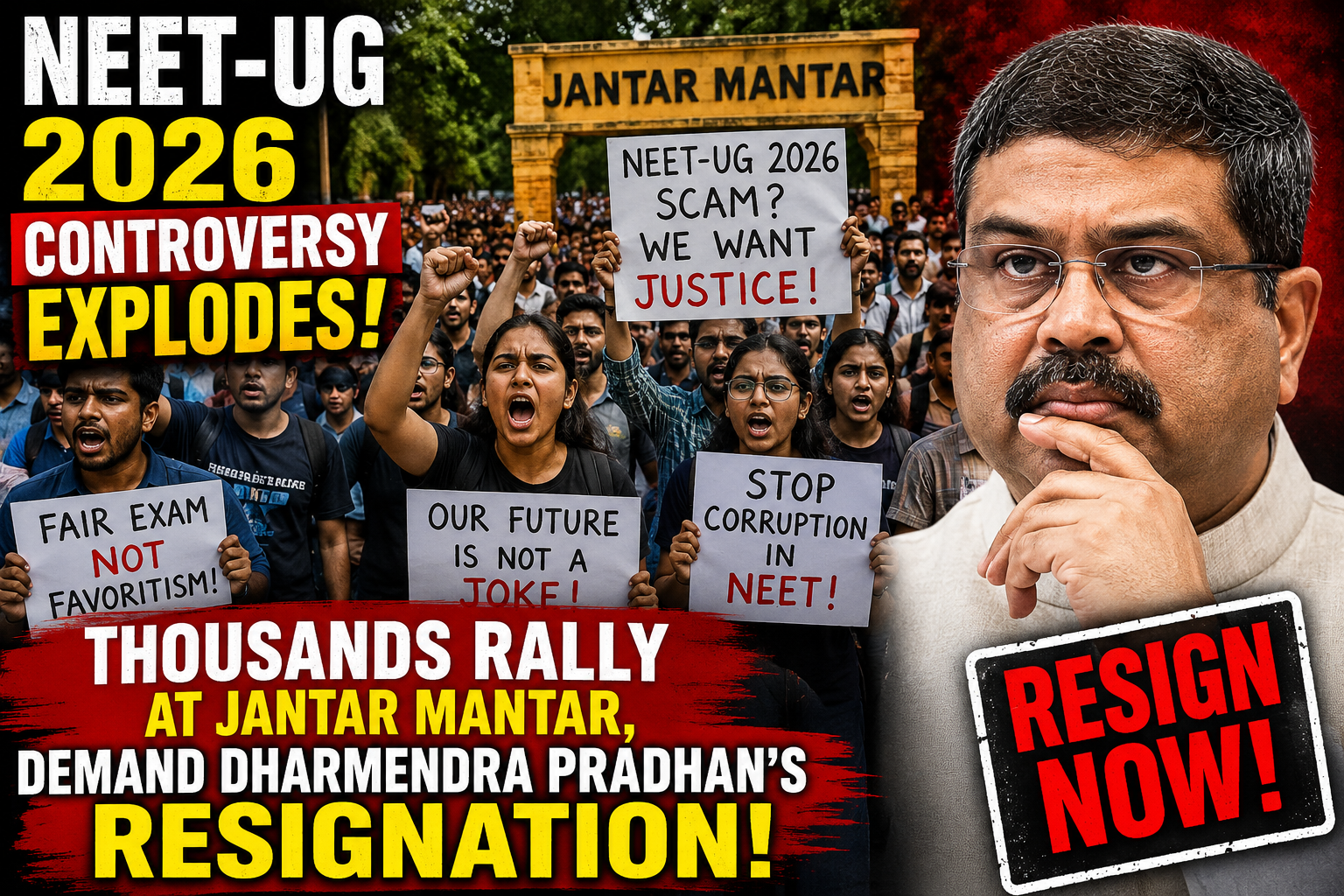
A unique political movement grabbed national attention on June 6, 2026, when the Cockroach Janata Party (CJP) organized its first-ever large-scale public protest at Jantar Mantar in New Delhi. Thousands of students, parents, education activists, and supporters gathered to voice their concerns over alleged irregularities in the NEET-UG 2026 examination and issues related to CBSE’s On-Screen Marking (OSM) system. NEET-UG 2026 Controversy Explodes: Thousands Rally at Jantar Mantar, Demand Dharmendra Pradhan’s Resignation.
The Protest, held peacefully from 10 AM to 5 PM, was centered around one major demand: the resignation of Union Education Minister Dharmendra Pradhan. Participants argued that recent controversies have shaken public confidence in India’s education system and highlighted the urgent need for accountability and reform.
What began as a satirical movement on social media has now stepped into the national spotlight, transforming online frustration into a visible public campaign.
Why Are Students Angry?
For millions of Indian students, competitive examinations are more than just tests-they often determine the course of their future careers.
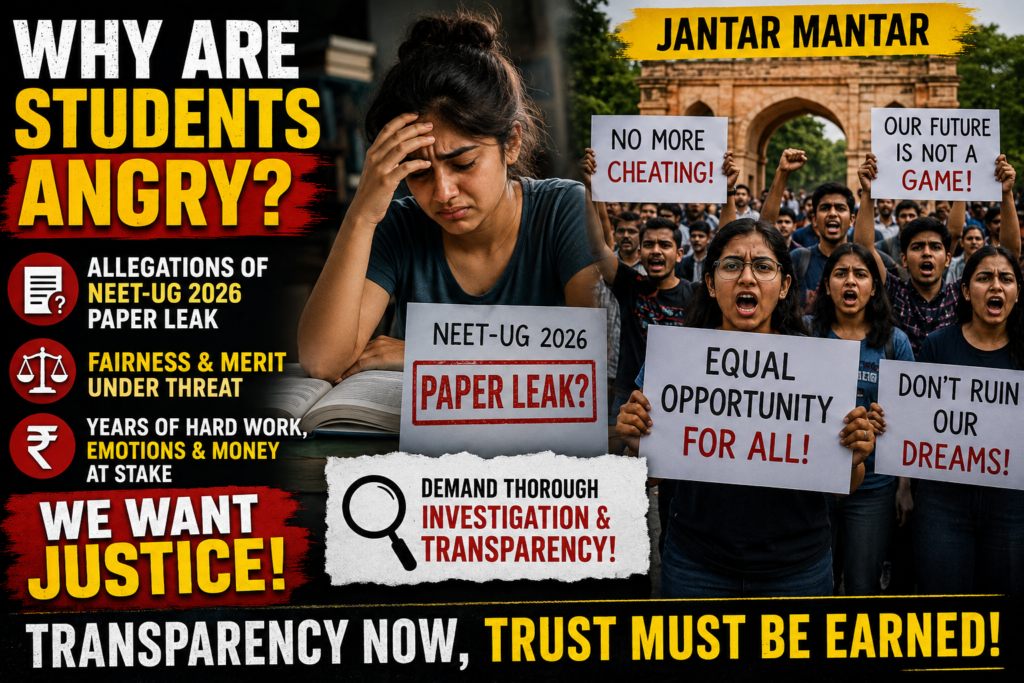
This is why allegations surrounding the NEET-UG 2026 examination have triggered strong reactions across the country. Students spend years preparing for medical entrance exams, investing countless hours of study, emotional effort, and significant financial resources in coaching and preparation.
When reports of a possible paper leak surfaced, many students felt betrayed. Even the possibility of examination malpractice raises serious questions about fairness and merit.
Protesters at Jantar Matar argued that every student deserves an equal opportunity to compete in a transparent and trustworthy system. They called on authorities to conduct a thorough investigation and make the findings public.
Concerns Over CBSE’s Digital Evaluation System:
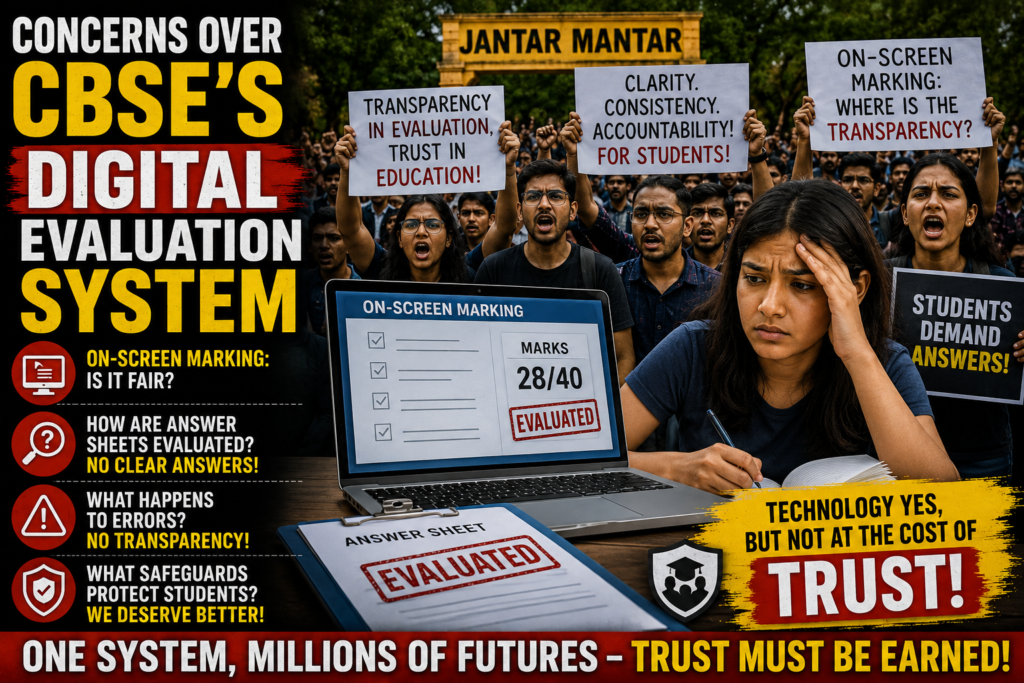
Apart from the NEET controversy, many participants also expressed concerns about CBSE’s On-Screen Marking system.
As education boards increasingly adopy digital evaluation methods, students and teachers have raised questions about transparency and consistency in the assessment process.
Many believe that while technology can improve efficiency, it must also ensure accuracy and accountability. Protesters demanded greater clarity regarding how answer sheets are evaluated, how error are corrected, and what safeguards exist to protect students from potential mistakes.
For many attendees, the issue was not just about one examination or one system-it was about ensuring trust in the broader education framework.
Thousands Gather at Jantar Mantar:
Jantar Mantar has long been one of India’s most important spaces for democratic protests, and the atmosphere on June 6 reflected that tradition.
Participants arrived carrying banners, placards, and posters calling for educational reforms and greater accountability. Despite the strong emotions surrounding the issue, the gathering remained peaceful throughout the day.
Students shared personal stories about the pressure they face during competitive examinations. Parents spoke the sacrifices families make to support their children’s educational dreams. Education activists highlighted the need for systemic reforms to prevent future controversies.
The event demonstrated that concerns about examination integrity extend far beyond political affiliation and affect families across the country.
From Online Satire to Real-World Movement:

The Cockroach janata party has often used humor and satire to comment on social and political issues. However, this protest marked a turning point for the organization.
What was once viewed primarily as an online movement successfully mobilized thousands of people for a real-world demonstration. The group’s unconventional name and creative style have helped it connect with younger audiences, pariticularly students who are active on social media.
Political observers noted that the protest reflects a growing trend in which digital communities evolve into offline civic movements.
Whether one agrees with the party’s methods or not, the event showed its ability to attract public attention and spark conversation around important issues.
Demand for Accountability:
One of the central themes of the protest was accountability.
Organizers argued that when major controversies emerge in national examinations, those responsible for overseeing the system must answer public concerns. This is why many protesters called for education Minister Dharmendra Pradhan’s resignation.
Supporters of the demand believe leadership accountability is essential for restoring public confidence. Others argue that investigations should be completed before assigning responsibility.
Regardless of political viewpoints, the debate has highlighted a broader concern: how can India’s education system maintain trust among milions of students competing for limited opportunities?
Why Examination Integrity Matters:
India’s competitive examination system affects millions of students every year.
Exams such as NEET, JEE, CUET, and various state-level entrance tests play a crucial role in determining access to higher education and professional careers.
Any allegation of irregularity can have serious consequences, including:
- Increased stress and anxiety among students
- Loss of trust examination authorities
- Delays in admissions and academic schedules
- Legal disputes and administrative challenges
- Questions about fairness and merit-based selection
Experts say that strengthening examination security and improving transparency should be top priorities moving forward.
Social Media Amplifies the Message:
The Protest quickly gained traction online, with videos, photographs, speeches, and campaign messages spreading across social media platforms.
Hashtags related to NEET-UG 2026, examination transparency, educational reforms, and accountability began trending as users debated the issues raised by protesters.
Social media played a crucial role in mobilizing supporters and ensuring that the concerns expressed at Janta Mantar reached a national audience.
The movement’s combination of satire, activism, and student-focused messaging helped it stand out in an increasingly crowded digital landscape.
Looking Ahead:
The June 6 protest may be remembered as more than just a single-day demonstration. It reflects growing concerns about transparency, fairness, and accountability within India’s education system.
Whether the demands of the Cockroach janata Party lead to immediate action remains uncertain. However, the protest has already succeeded in drawing attention to issues that affect millions of students and families across the country.
As investigations continue and policymakers respond, students will be hoping for reforms that strengthen trust in examinations and ensure that merit remains the foundation of educational opportunity.
Conclusion:
The Cockroach Janata Party’s first major public protest has brought national attention to concerns surrounding the NEET-UG 2026 controversy and CBSE’s evaluation system.
More importantly, it has highlighted the voices of students who believe that fairness, transparency, and accountability must remain at heart of India’s education system.
The coming weeks will likely determine whether the protest becomes a turning point in the debate over educational reforms or simply the beginning of a larger movement demanding change.