

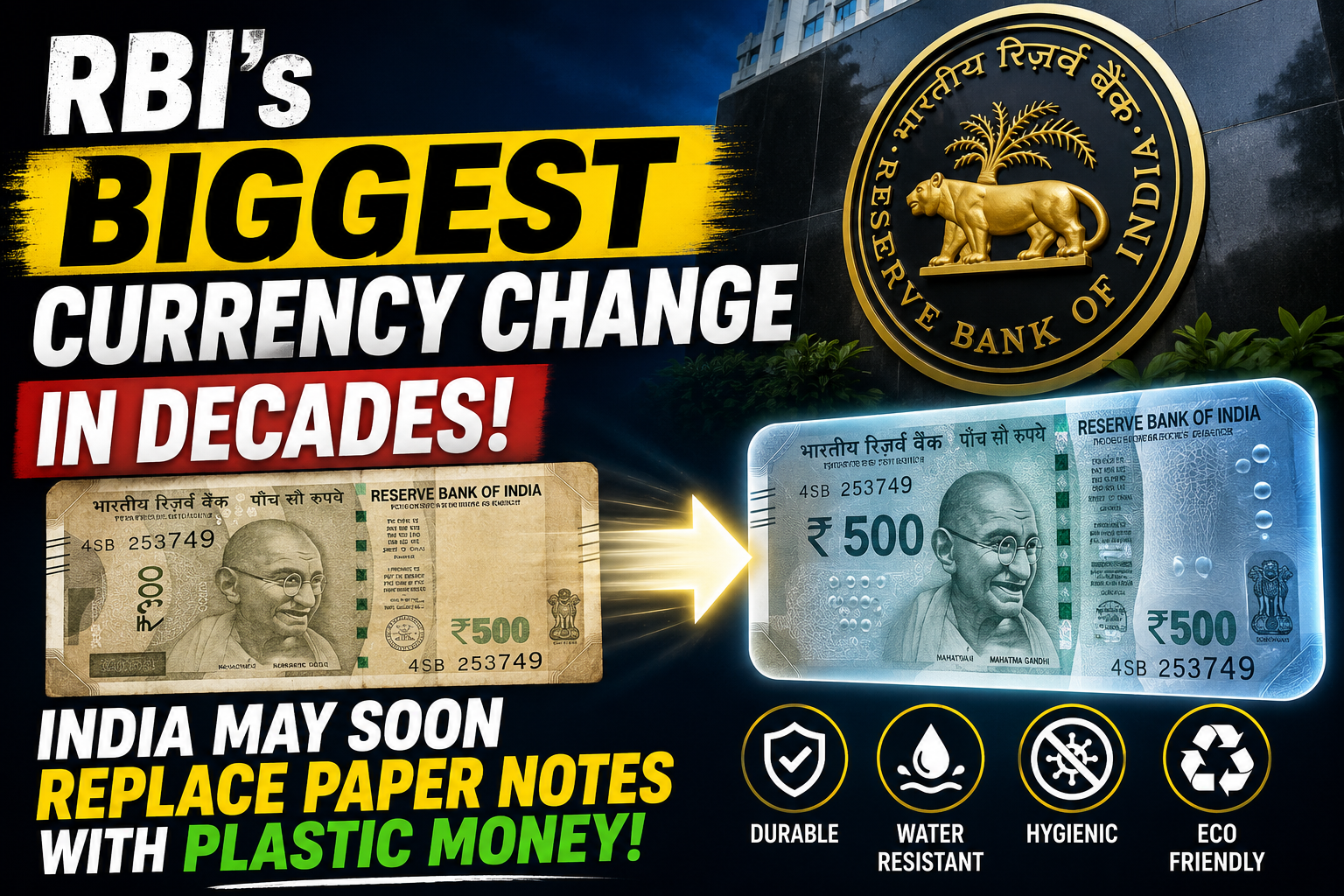
RBI Plans To Replace India’s Paper Currency with Durable Plastic Notes: A Major Modernization Move for the Future.
RBI Considering Plastic Currency Notes: What It Means for India.
India may soon witness one of the biggest transformations in its currency system. Reports suggest that the Reserve Bank of India (RBI) is exploring the possibility of replacing traditional paper banknotes with durable plastic currency notes, similar to those already used in countries such as Australia, Canada, New Zealand, the United Kingdom, and several others. “RBI’s Biggest Currency Change in Decades: India May Soon Replace Paper Notes with Plastic Money”
If implemented, this move would mark a significant modernization of India’s financial infrastructure and could change the way millions of Indians use and handle cash every day.
Plastic currency notes, often known as polymer notes, are designed to last longer, remain cleaner, and offer stronger protection against counterfeiting. With India still heavily dependent on cash transactions despite the rapid growth of digital payments, the introduction of polymer notes could bring multiple benefits to the economy.
What Are Plastic Currency Notes?
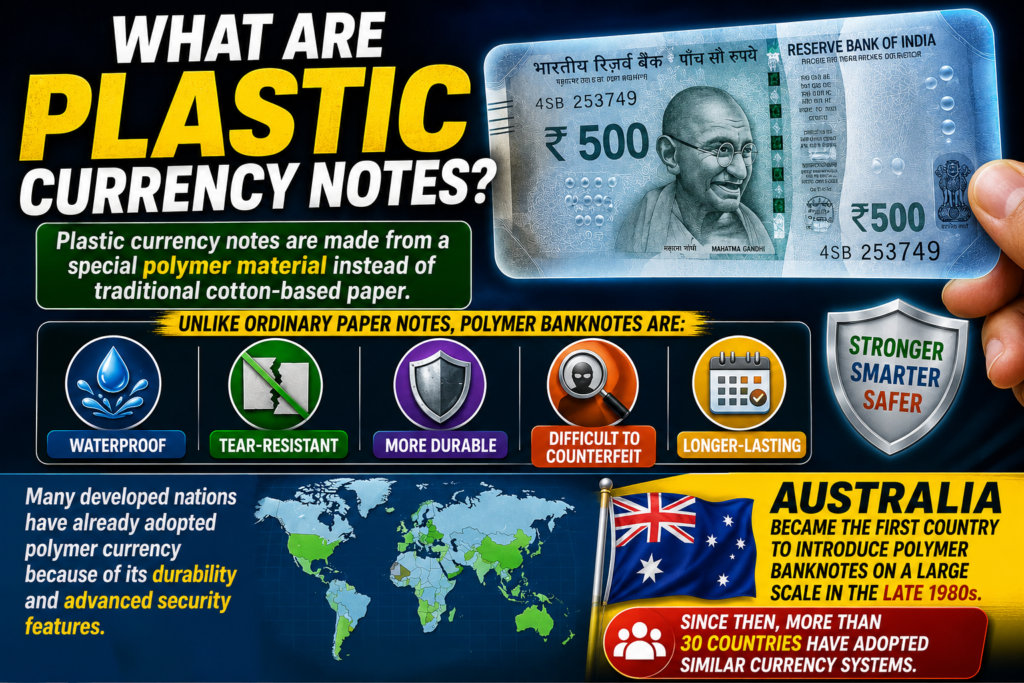
Plastic currency notes are made from a special polymer material instead of traditional cotton-based paper.
Unlike ordinary paper notes, polymer banknotes are:
- Waterproof
- Tear-resistant
- More durable
- Difficult to counterfeit
- Longer-lasting
Many developed nation have already adopted polymer currency because of its durability and advanced security features.
Australia became the first country to introduce polymer banknotes on a large scale in the late 1980s. Since then, more than 30 countries have adopted similar currency systems.
Why Is RBI Considering Plastic Notes?
The RBI has been studying the advantages of polymer notes for several years. One of the biggest reasons behind this consideration is the short lifespan of paper currency.
India’s banknotes often face:
- Heavy circulation
- Frequent handling
- Exposure to dust and moisture
- Physical damage
- Counterfeiting risks
Lower denomination notes especially become worn out quickly and require regular replacement.
The cost of printing and replacing damaged notes is substantial. Polymer notes can significantly reduce these expenses because they remain in circulation much longer than paper notes.
Longer Lifespan Means Lower Costs:
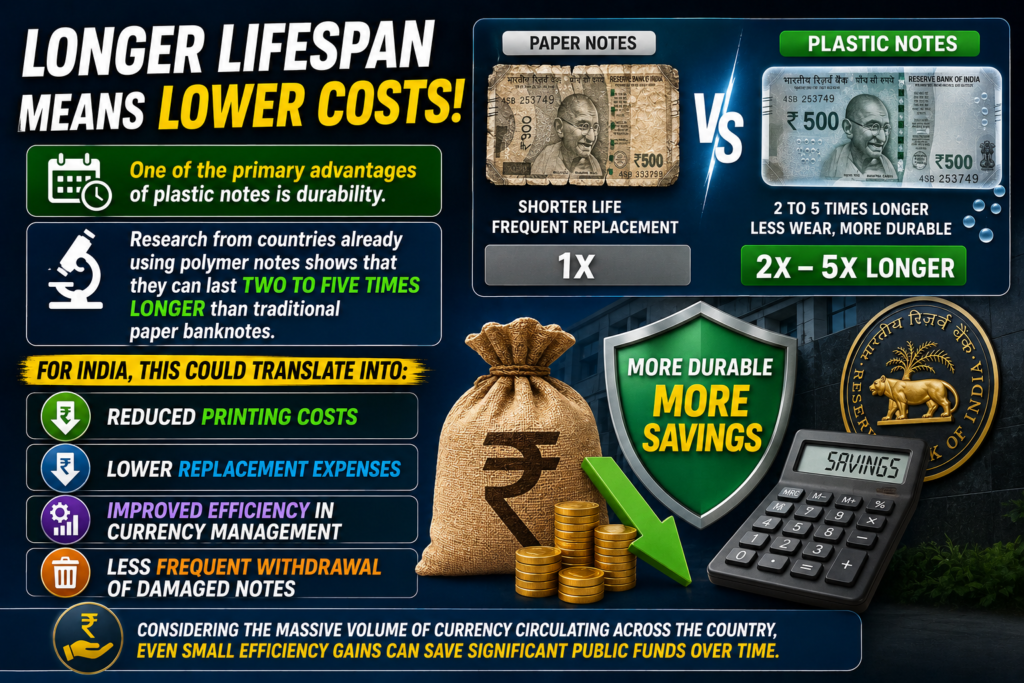
One of the primary advantages of plastic notes is durability.
Research from countries already using polymer notes shows that they can last two to five times longer than traditional paper banknotes.
For India, this could translate into:
- Reduced printing costs
- lower replacement expenses
- Improved efficiency in currency management
- Less frequent withdrawal of damaged notes
Considering the massive volume of currency circulating across the country, even small efficiency gains can save significant public funds over time.
Stronger protection Against Counterfeiting:
Counterfeit currency remains a concern for central banks around the world.
Although India has introduced advanced security features in recent years, counterfeiters continuously attempt to replicate banknotes.
Polymer notes offer enhanced security because they can include sophisticated features such as:
Transparent Windows
One of the most recognizable features of polymer notes is a clear transparent window that is extremely difficult to reproduce.
Complex Holograms
Advanced holographic elements can be embedded into the note, making duplication more challenging.
Color-Shifting Features
Special inks change color when viewed from different angles.
Raised Printing
Textured elements improve both security and accessibility.
These security upgrades can help strengthen public confidence in the currency system.
Cleaner and More Hygienic Currency:
Another major advantage of polymer notes is hygiene.
Traditional paper notes absorb:
- Dirt
- Sweat
- Moisture
- Oils from hands
- Bacteria
In contrast, polymer notes are absorbent and easier to clean.
Following the COVID-19 pandemic, many countries have become more conscious about hygiene in public transactions. Polymer notes offer a cleaner alternative that may help reduce contamination risks.
Environmental Benefits of Plastic Currency:
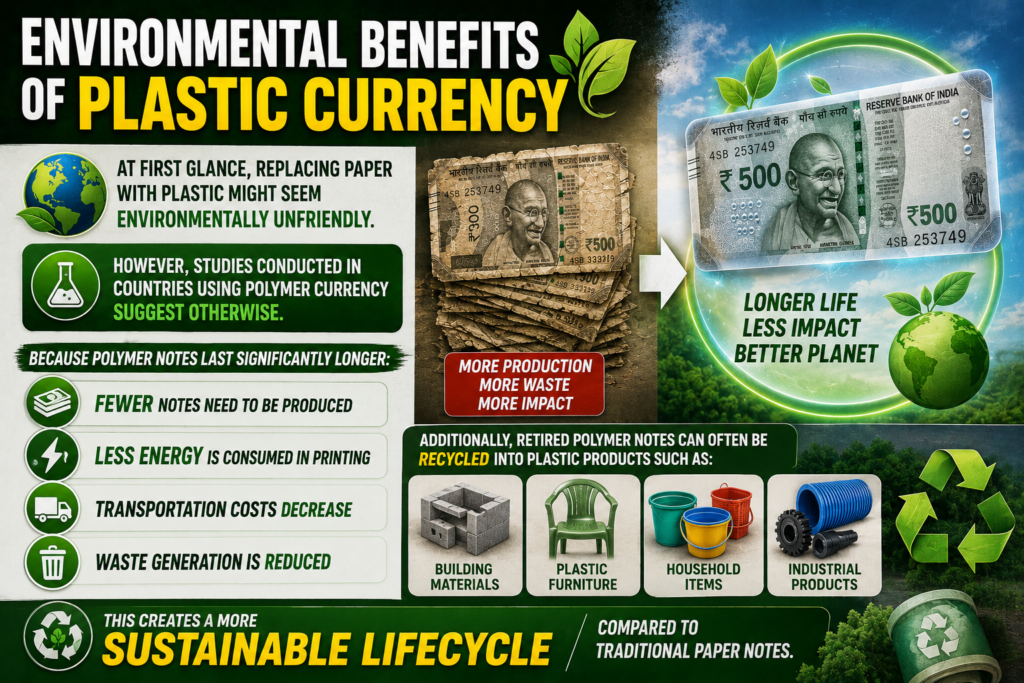
At first glance, replacing paper with plastic might seem enviromentally unfriendly.
However, studies conducted in countries using polymer currency suggest otherwise.
Because polymer notes last significantly longer:
- Fewer notes need to be produced
- Less energy is consumed in printing
- Transportation costs decrease
- Waste generation is reduced
Additionally, retired polymer notes can often be recycled into plastic products such as:
- Building materials
- Plastic furniture
- Household items
- Industrial products
This creates a more sustainable lifecycle compared to traditional paper notes.
Countries Already Using Polymer Notes:
India would not be alone in adopting plastic currency.
These include:
- Australia
- Canada
- United kingdom
- New Zealand
- Singapore
- Vietnam
- Romania
- Brunei
- Mexico
- Malaysia
Many of these countries report improved durability, reduced counterfeiting, and lower long-term operational costs.
Their experience could provide valuable lessons for India if the transition moves forward.
Potential Challenges of Switching to Plastic Notes:
Despite the advantages, the transition would not be without challenges.
High Initial Costs
The production of polymer notes is generally more expensive than paper notes during the initial rollout phase.
The government and RBI would need to invest heavily in:
- Printing infrastructure
- Testing
- Distribution systems
- Public awareness campaigns
ATM and Machine Compatibility
Thousands of ATMs and cash-handling machines across India may require upgrades to accommodate the new notes.
This process could take time and involve additional costs.
Public Adaptation
India has over a billion people using currency daily.
Educating citizens about:
- New security features
- Handling methods
- Authentication techniques
Would be essential for a smooth transition.
Impact on India’s Economy:
The introduction of polymer notes could positively influence multiple areas of the economy.
Improved Currency Management
Longer-lasting notes reduce logistical burdens associated with printing and replacement.
Better Security
Advanced anti-counterfeit features strengthen the integrity of the financial system.
Cost Savings
Although the initial investment my be high, long-term savings could be substantial.
Enhanced Public Confidence
Modern currency systems often improve trust among citizens and businesses.
Digital Payments vs Physical Currency:
India has become one of the world’s leaders in digital payments through systems such as UPI.
However, cash remains essential for millions of people, particularly in:
- Rural regions
- Small businesses
- Informal sectors
- Daily retail transactions
Even as digital adoption grows, physical currency continues to play a critical role in the economy.
This makes the modernization of banknotes an important priority for the RBI.
Final Thoughts:
The RBI’s reported plan to explore durable plastic currency notes signals a forward-looking approach to modernizing India’s monetary system.
Polymer notes offer numerous advantages, including longer lifespan, improved hygiene, stronger security features, and reduced long-term costs. While challenges such as implementation expenses and infrastructure upgrades remain, the potential benefits could outweigh the initial hurdles.
As India continues its journey toward becoming a more technologically advanced and economically resilient nation, upgrading its currency system may be the next logical step.
Whether the transition happens soon or gradually over the coming years, one thing is clear: India’s cash ecosystem is evolving, and polymer banknotes could play a major role in shaping its future.