

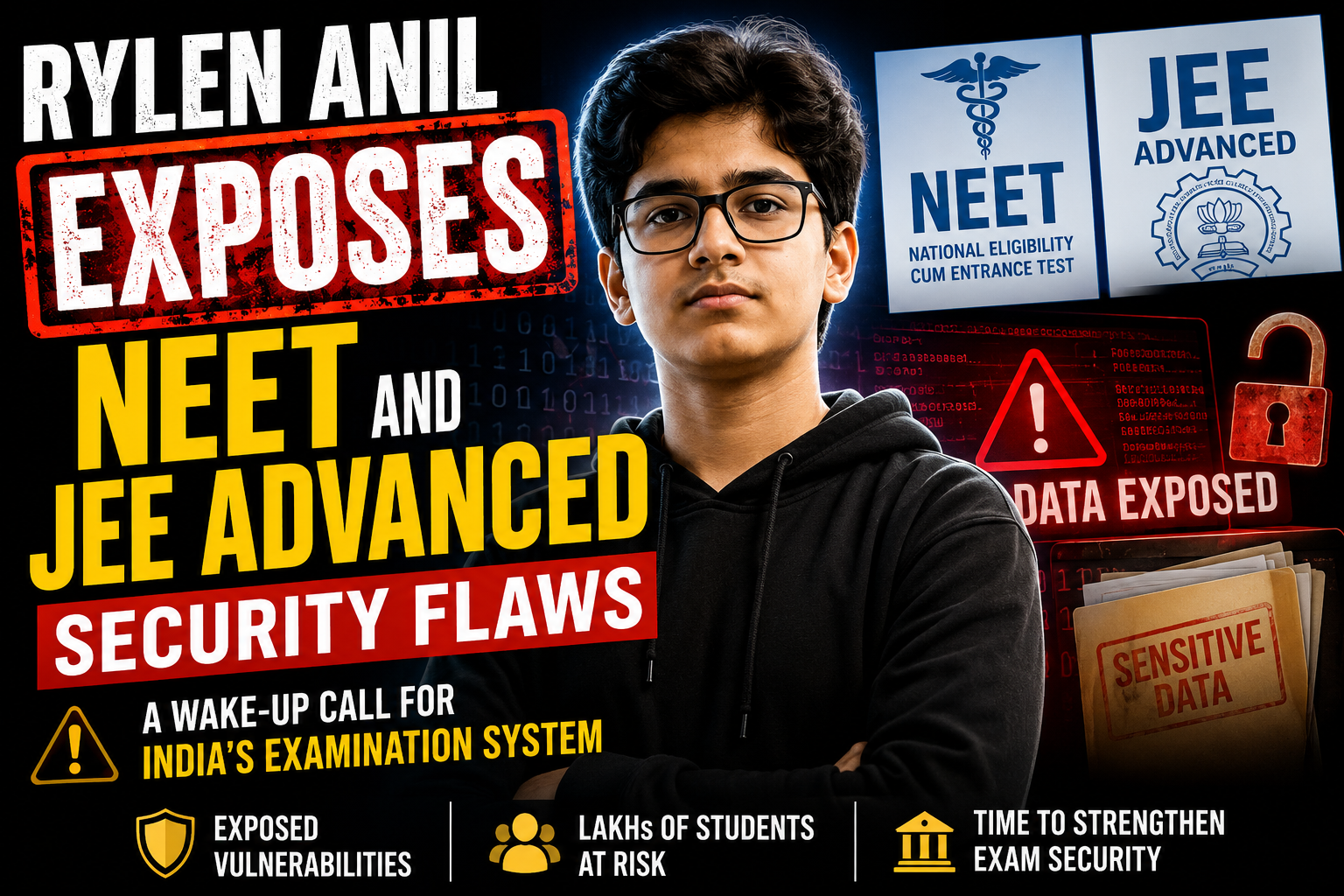
India’s most prestigious entrance examinations, NEET and JEE Advanced, are trusted by millions of students every year. These exams determine the future of aspiring doctors and engineers, making the security and integrity of their systems extremely important. Rylen Anil Exposes NEET and JEE Advanced Security Flaws: A Wake-Up Call for India’s Examination System
Recently, a 16-year-old cybersecurity researcher, Rylen Anil, made headlines after identifying serious security vulnerabilities connected to the digital infrastructure of NEET and JEE Advanced. His discoveries have sparked a nationwide debate about cybersecurity, student data protection and the need for stronger digital safeguards in India’s examination ecosystem.
Who is Rylen Anil?
Rylen Anil is a Class 12 student based in Dubai with a strong interest in cybersecurity and ethical hacking. Despite being only 16 years old, he gained attention for responsibly reporting security flaws in major examination-related systems rather than exploiting them for personal gain.
His actions have earned praise from cybersecurity experts and educational institutions, who view responsible disclosure as a critical part of improving online security.
The JEE Advanced 2026 Data Exposure
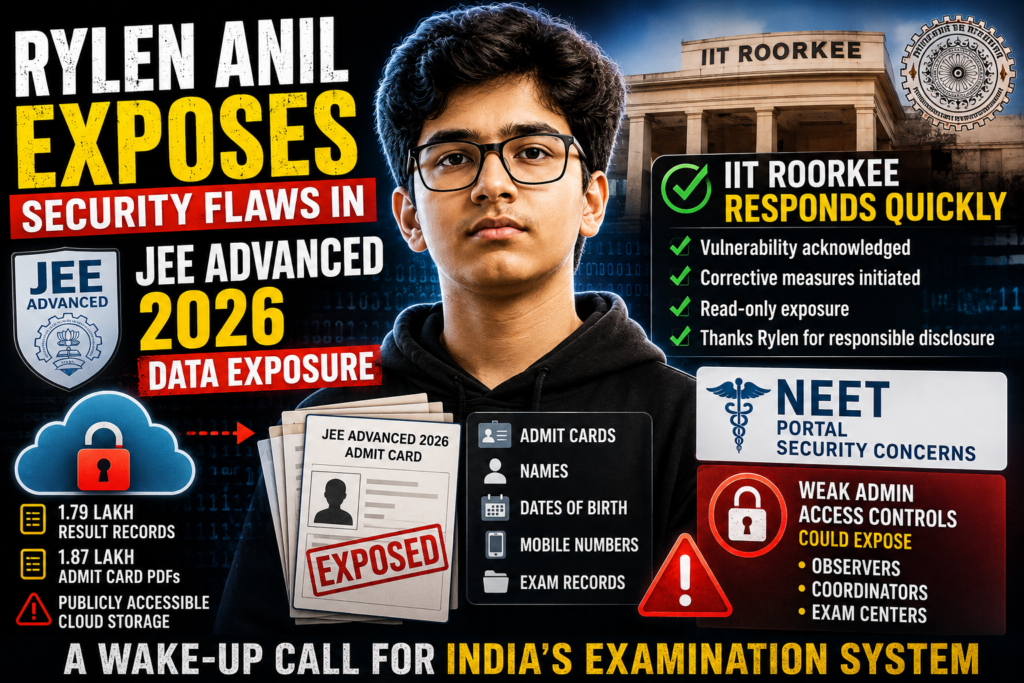
The biggest revelation came when Rylen identified a cloud storage configuration issue associated with the JEE Advanced 2026 result infrastructure.
According to his findings, publicly accessible cloud storage allegedly exposed a large number of candidate records without requiring authentication. The exposed information reportedly included admit cards, candidate names, dates of birth, mobile numbers and examination-related records.
Reports suggested that approximately 1.79 lakh result records nearly 1.87 lakh admin-card PDFs could have been accessed due to the configuration issue.
Importantly, the issue was described as a cloud storage misconfiguration rather than a traditional hacking attack. There was no indication that data had been altered, but the exposure raised serious privacy concerns.
IIT Roorkee Responds Quickly
What made this case stand out was the response from Indian Institute of Technology Roorkee, the organizing institute for JEE Advanced 2026.
After the vulnerability was reported, IIT Roorkee publicly acknowledged the issue and stated that corrective measures were being implemented immediately. The institute also thanked Rylen for his responsible disclosure and ethical conduct.
The institute clarified that the exposed was read-only, meaning unauthorized users could not modify records. Nevertheless, the incident highlighted the importance of properly securing sensitive student information.
NEET Portal Security Concerns
Before the JEE Advanced issue gained attention, Rylen had reportedly highlighted vulnerabilities related to systems connected with NEET re-examination infrastructure.
According to reports, the vulnerability allegedly involved weaknesses in administrative access controls that could potentially expose information related to examination observers, coordinators and examination centers. These claims generated significant discussion across educational and cybersecurity communities.
Why This Matters to Students
For millions of students preparing for competitive exams, trust in the examination process is essential.
Students share highly sensitive information during registration, including:
- Full names
- Mobile numbers
- Addresses
- Date of Birth
- Identity documents
- Academic records
- Examination details
Any security lapse involving this data can privacy risks and reduce confidence in the examination system.
In today’s digital world, educational institutions are responsible not only for conducting fair examinations but also for protecting student information from accidental exposure.
Ethical Hacking vs Cybercrime
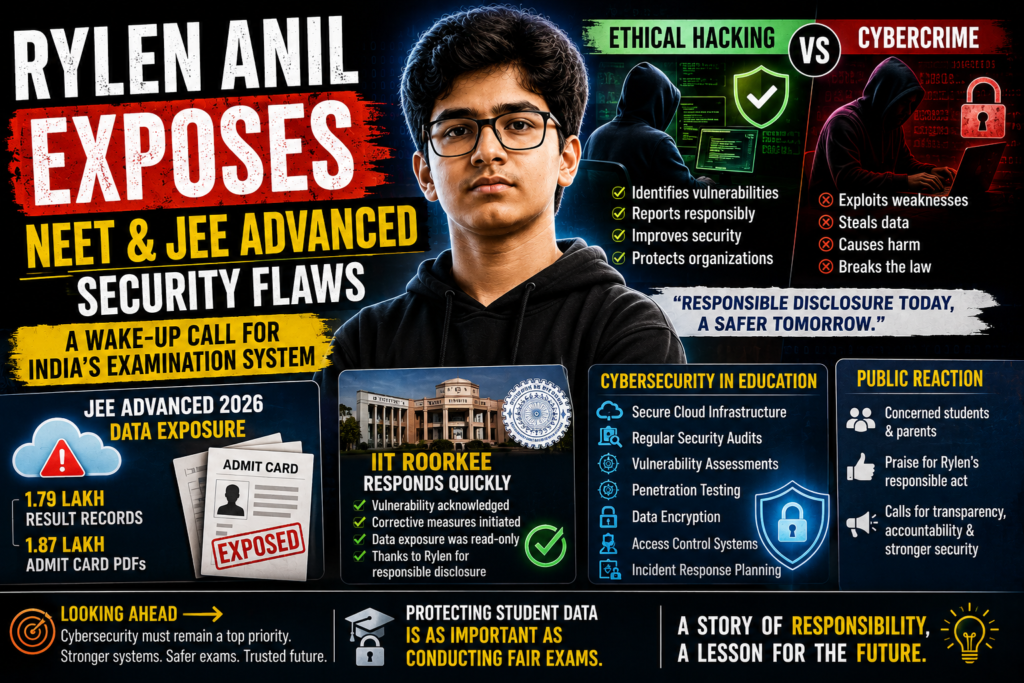
One important aspect of this story is the distinction between ethical hacking and cybercrime.
Ethical hackers identify vulnerabilities and report them responsibly so organizations can fix them. Their goal is to improve security rather than exploit weaknesses.
Rylen’s case has become an example of how responsible disclosure can help institutions strengthen their systems before malicious actors discover the same vulnerabilities.
Many cybersecurity professionals argue that organizations should encourage responsible reporting and establish clear channels for researchers to disclose vulnerabilities safely.
Growing Importance of Cybersecurity in Education
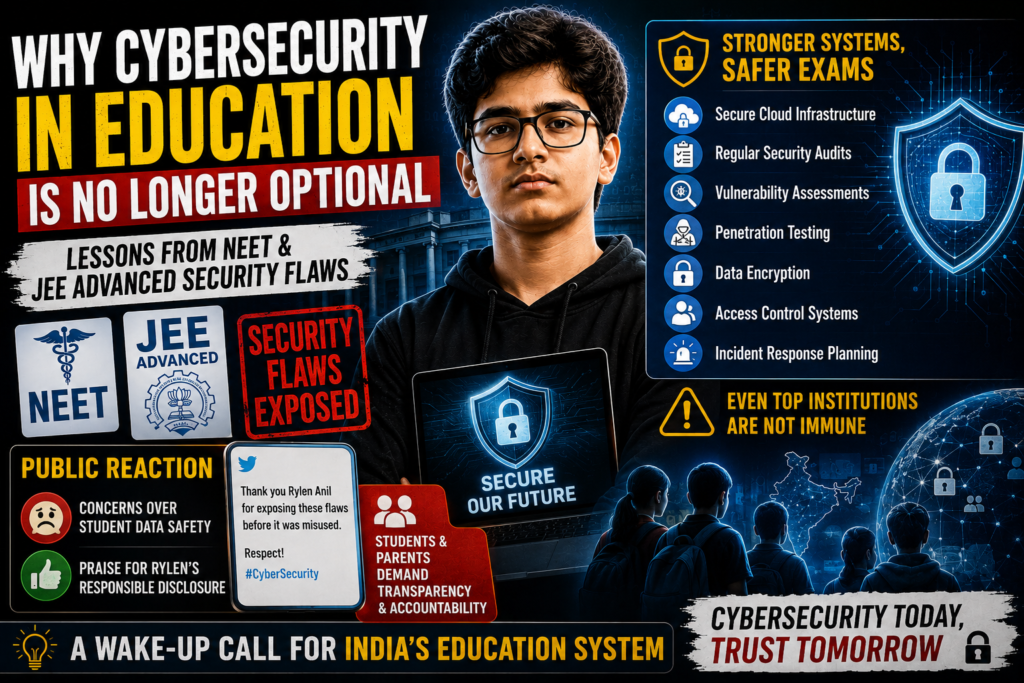
As examinations become increasing digital, cybersecurity is no longer optional.
Educational institutions must invest in:
- Secure cloud infrastructure
- Regular security audits
- Vulnerability assessments
- Penetration testing
- Data encryption
- Access control systems
- Incident response planning
The recent incidents demonstrate that even prestigious institutions can face challenges in maintaining secure digital environments.
Public Reaction
The story quickly gained attention on social media and news platforms.
Many students and parents expressed concern about the safety of examination data. Others praised Rylen for bringing the issues to light and helping authorities address vulnerabilities before they could be abused.
The incident also reignited discussions about transparency, accountability and cybersecurity preparedness across India’s education sector.
Looking Ahead
The exposure of vulnerabilities in systems linked to NEET and JEE Advanced serves as an important reminder that cybersecurity must remain a top priority.
While authorities have taken steps to address the reported issues, the larger lesson is clear; educations must continuously strengthen their digital infrastructure to keep pace with evolving security challenges.
For students, parents and educators this episode highlights the importance of protecting personal data in an increasingly connected world.
Conclusion
The actions of 16-years old cybersecurity researcher Rylen Anil have sparked a national conversation about examination security in India. By responsibly disclosing vulnerabilities linked to NEET and JEE Advanced systems, he brought attention to weaknesses that might otherwise have remained unnoticed.
Whether viewed as a young ethical hacker or a cybersecurity prodigy, his work has emphasized one critical message: protecting student data is just as important as conducting fair examinations.
As India continues to digitize its education ecosystem, stronger cybersecurity measures, regular audits and responsible vulnerability reporting will be essential to maintaining trust in the country’s most important entrance examinations.
Final Thoughts: More Than Just a Cybersecurity story
At first glance, the story of Rylen Anil exposing security flaws in NEET and JEE Advanced may seem like a technical cybersecurity issue. However, when we look deeper, it is really a story about responsibility, awareness and the future of digital education.
Every year, millions of students dedicate countless hours to preparing for competitive examinations. They place their trust in institutions to not only conduct fair exams but also protect their personal information. when vulnerabilities are discovered, it reminds us that digital security is now an essential part of the education system, not just an optional feature.
What makes this incident particularly remarkable is that the issue was brought to light by a teenager who chose the path of responsible disclosure instead of misuse. In a world where cyber threats continues to evolve, ethical researchers play a crucial role in helping organizations identify weaknesses before they can be exploited by malicious actors.
1 thought on “Rylen Anil Exposes NEET and JEE Advanced Security Flaws: A Wake-Up Call for India’s Examination System”