

When Even a Gift Feels Suspicious: U.S. Officials and the Growing Fear of Espionage
Diplomatic trips are usually filled with formal handshakes, carefully planned meetings, cultural events, and symbolic gifts exchanged between nations. These moments are meant to build and show respect.
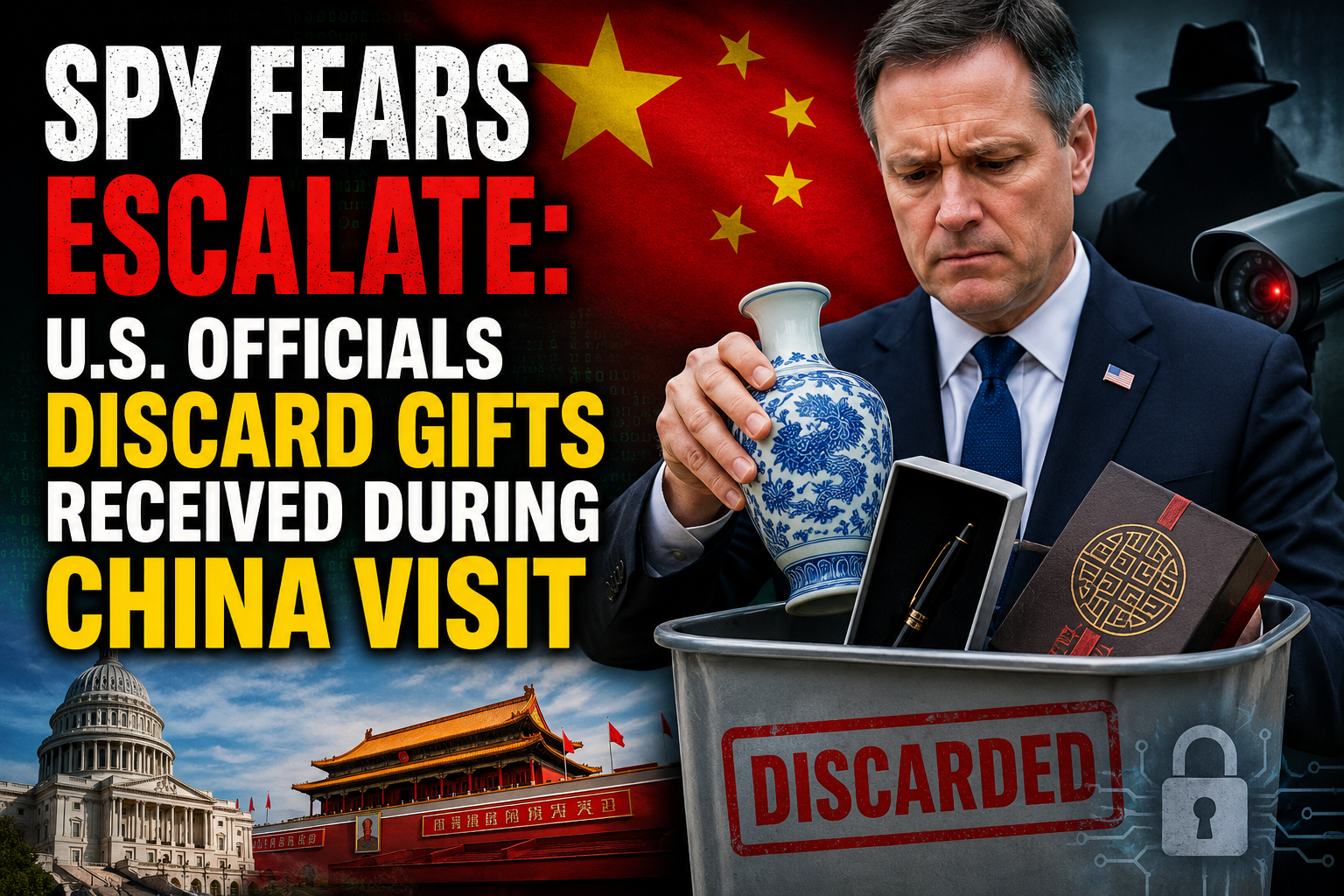
“Spy Fears Escalate: U.S. Officials Discard Gifts Received During China Visit”
But recently, reports surfaced that some U.S. officials chose to throw away gifts they received during a trip to china because they feared the items could potentially be used for spying.
That detail may sound dramatic, but it reveals something much bigger happening behind the scenes of global politics. The relationship between the United States and China has become increasingly tense, and distrust between the two countries is now so deep that even simple souvenirs are being treated as possible security threats.
In today’s world, where technology is everywhere and surveillance tools are smaller and smarter than ever before, concerns like these are no longer limited to spy movies.
This story is not really about gifts. It is about fear, cybersecurity, global power struggles, and a growing belief that modern espionage can hide in everyday objects.
Why Would Officials Throw Away Gifts?
At first glance, the idea seems extreme. Why would trained government officials discard gifts from another country?
The answer lies in modernintelligence and cybersecurity concerns.
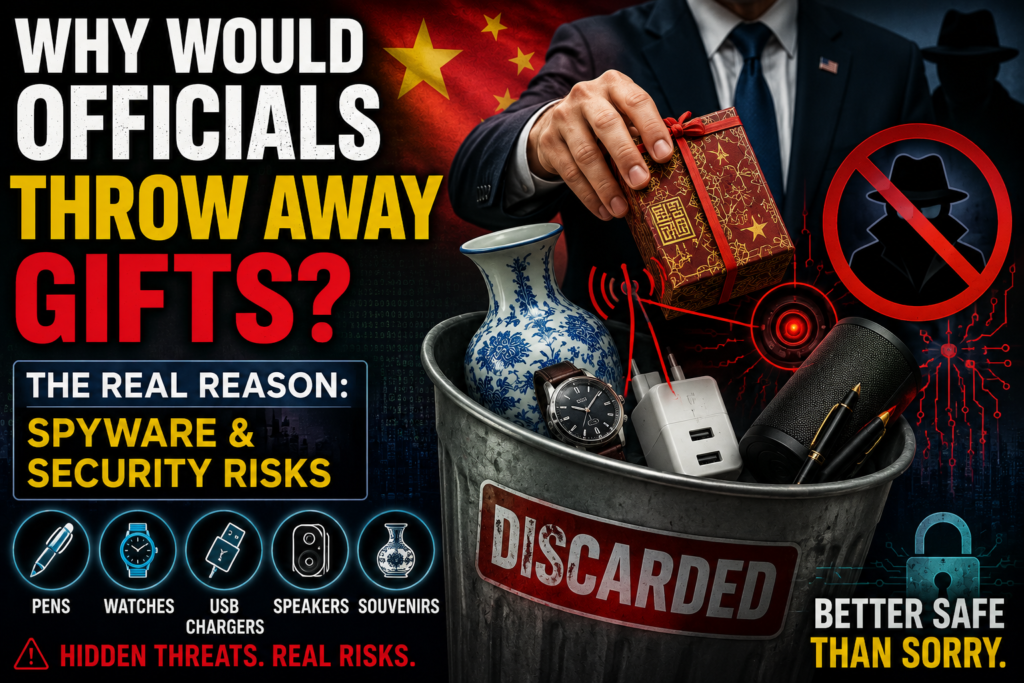
Security agencies have long warned diplomats and government staff about accepting electronic devices or unfamiliar items during foreign visits. Even harmless-looking objects could theoretically contain hidden technology capable of tracking movements, recording conversations, or collecting sensitive information.
Today, tiny surveillance components can fit inside:
- Pens
- Watches
- USB chargers
- Speakers
- Decorative souvenirs
- Smart devices
And because technology has become so advanced, governments are taking fewer chances.
Even if there is no direct evidence that a gift contains spyware, intelligence officials are trained to think preventively. In national security, avoiding a risk is often considered safer than investigating it later.
So, while throwing away gifts may appear excessive to some people, within government security circles it is viewed as a precaution.
The Bigger Issue: U.S. and China No Longer Trust Each Other
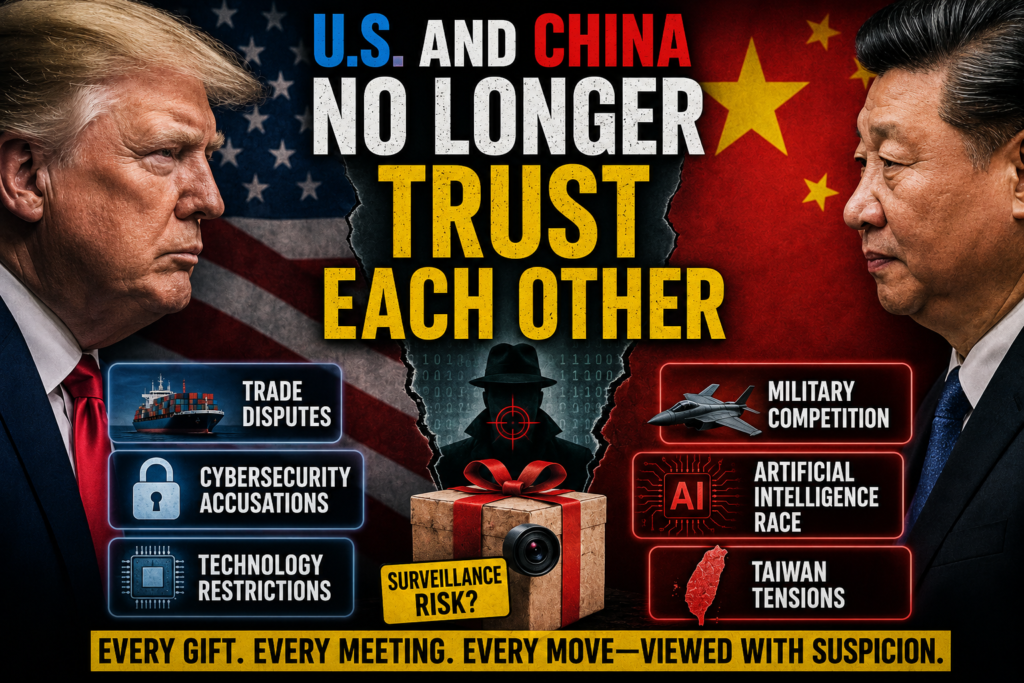
The real story here is the growing distrust between Washington and Beijing.
Over the past several years, tensions between the two countries have escalated across multiple areas:
- Trade disputes
- Cybersecurity accusations
- Technology restrictions
- Military competition
- Artificial intelligence development
- Taiwan-related tensions
Both countries see each other not just as economic competitors, but increasingly as strategic rivals.
That rivalry has created an atmsphere where almost every interaction is viewed through a security lens.
Something as simple as a diplomatic gift, which once symbolized friendship, can now raise concerns about surveillance and intelligence gathering.
That saya a lot about the current state of international relations.
Espionage Looks Different in the Digital Age
When most people think about espionage, they imagine secret agents, hidden cameras, or classified documents stolen from locked rooms.
But modern spying has evolved.
Today, intelligence gathering often happens digitally, Cybersecurity experts warn that information can now be collected through:
- Smartphones
- Wireless networks
- Bluetooth connections
- Email systems
- Social media activity
- Cloud storage
- Smart electronics
Technology has changed the rules completely.
A tiny chip hidden inside an abject could potentially transmit data remotely. A compromised device connected to a network might expose passwords or confidential files. Even a phone charger can become a cybersecurity concern under the wrong circumstances.
That is why governments worldwide have become far more cautious during international travel.
In some cases, officials are issued temporary phones and laptops specifically designed for overseas trips. Once they return home, those devices may even be destroyed or isolated from secure systems.
It sounds intense, but cybersecurity threats are now treated as a major part of national defense.
This Isn’t Just About China
Although this incident involves China, concerns over foreign surveillance are not unique to one country.
Governments around the world engage in intelligence gathering. That has always been part of international politics.
However, the scale and sophistication of modern cyber espionage have increased dramatically over the past decade.
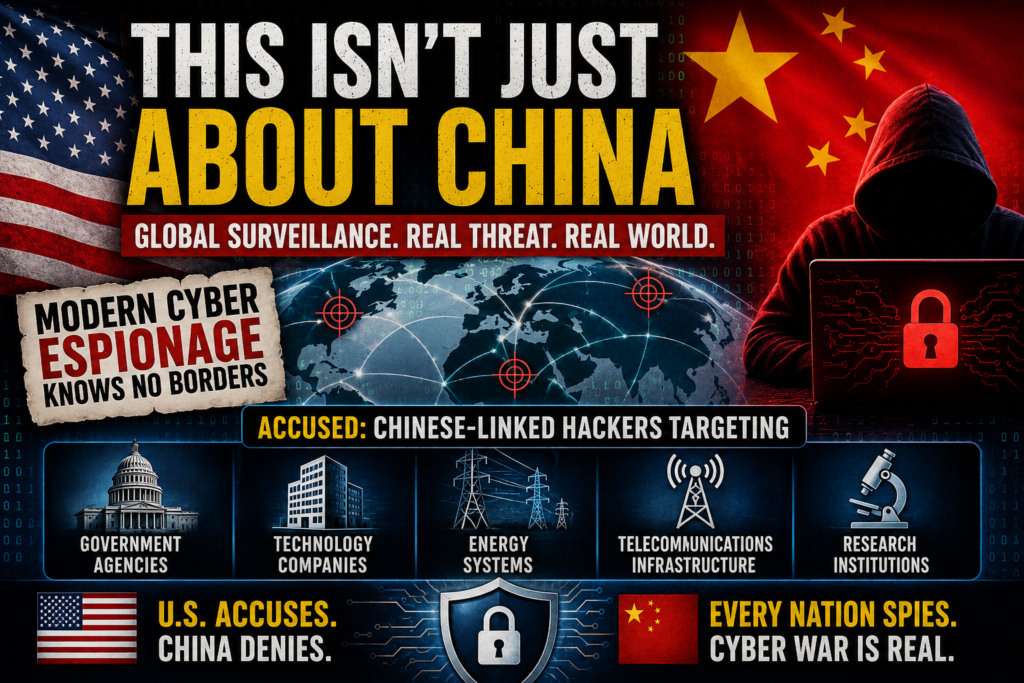
The United States has repeatedly accused Chinese-linked hackers of targeting:
- Government agencies
- Technology companies
- Energy systems
- Telecommunications infrastructure
- Research institutions
China has denied these accusations and often responds by claiming it is also a victim of cyberattacks from foreign nations.
The reality is that cybersecurity has become one of the biggest battlegrounds in global politics.
Countries are competing not only militarily and economically, but digitally as well.
A Small Story That Reflects a Bigger Global Shift
At first, the story about discarded gifts may seem minor compared to larger geopolitical issues. But symbolically, it matters a lot.
Diplomatic gifts traditionally represent goodwill. They are gestures meant to strengthen relationships between nations.
When officials no longer feel comfortable even keeping those gifts, it reflects how deeply suspicion has entered international diplomacy.
Trust is becoming harder to maintain in a world shaped by:
- Cyber threats
- Data breaches
- AI competition
- Surveillance technology
- Information warfare
This is part of a broader shift happening globally. Security concerns are increasingly influencing everything from trade policies to academic research partnerships.
The digital world has blurred the line between ordinary technology and potential intelligence tools.
History Shows These Fears Are Not New
While modern technology makes espionage more advanced, the idea of surveillance hidden inside gifts is not new at all.
One of the most famous Cold war spying incidents involved a decorative wooden carving gifted to the U.S. Embassy in Moscow by Soviet representatives in 1945.
Hidden inside the object was a listening device that remained undetected for years.
That operation became one of the most well-known examples of Cold War espionage.
The difference today is that technology is far more powerful and much harder to detect.
Modern surveillance devices can be:
- Smaller than a coin
- Wirelessly connected
- Battery efficient
- Internet-enabled
- Difficult to trace
Because of that, intelligence agencies now approach even routine situations with extreme caution.
Final Thoughts
The report that U.S. officials discarded gifts received during their China trip seem like a small diplomatic detail, but it reveals a much larger reality about the modern world.
We are living in an era where technology, cybersecurity, and geopolitics are deeply interconnected. Trust between nations is increasingly fragile, and even symbolic gestures are now viewed through the lens of national security.
Whether the gifts posed any actual threat may never be publicly known. But the fact that officials were concerned enough to throw them away says everything about the current climate between the United States and China.
In today’s digital age, espionage no longer looks like it did decades ago. Sometimes, it may arrive wrapped like a souvenir.