

India’s Semiconductor Dream Begins in Gujarat: Inside Micron’s Historic Chip Facility
For years, India has been known as the world’s IT powerhouse. From software development to digital services, Indian talent has played a major role in powering the global tech industry. But when it came to semiconductor chips-the tiny components that run smartphones, cars, laptops, medical devices, and even satellites-India mostly depended on imports.
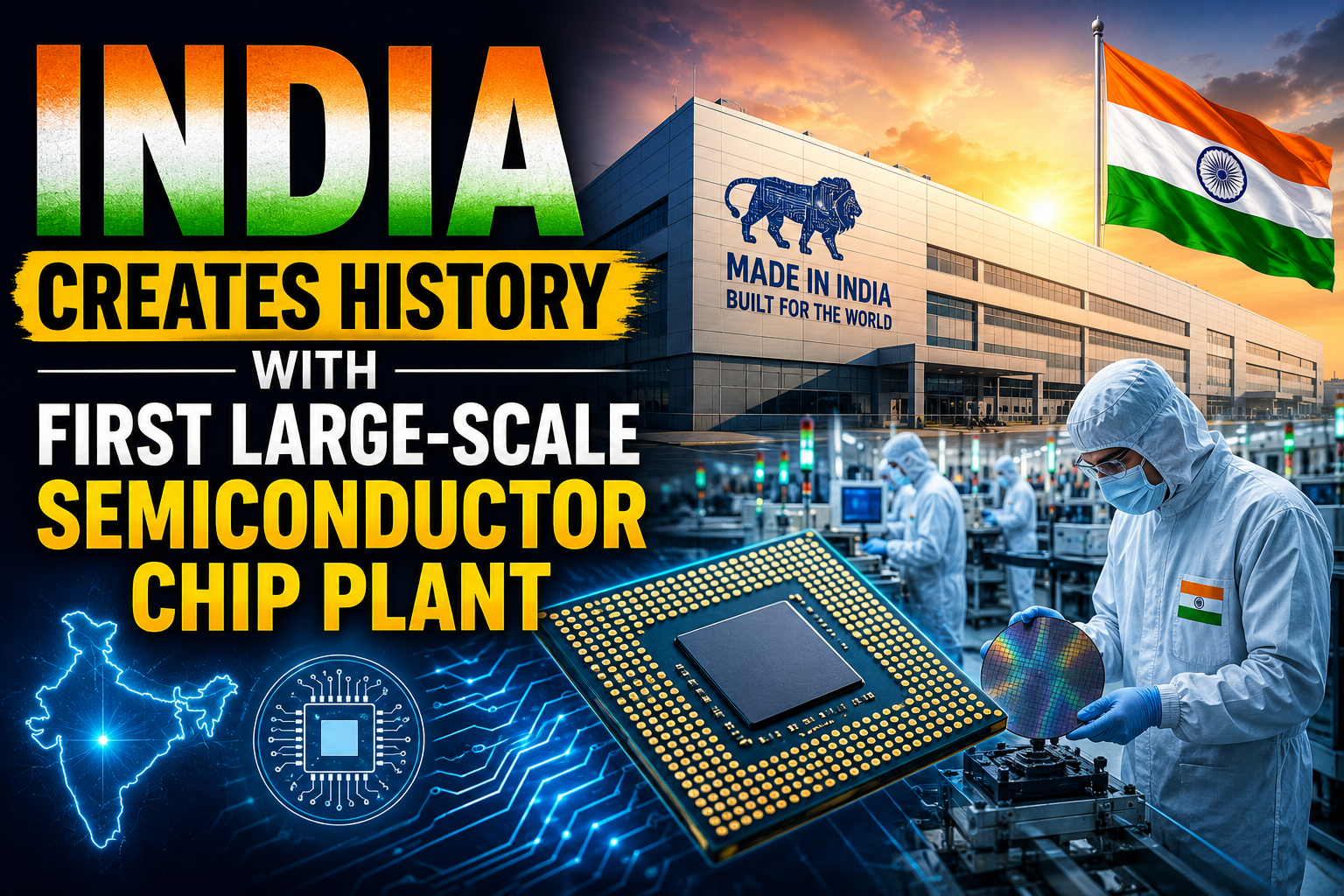
“India Creates History With First Large-Scale Semiconductor Chip Plant”
That is now beginning to change.
In a major step toward technological self-reliance, Micron Technology has launched India’s fisrt large-scale commercial semiconductor chip facility in Sanand, Gujarat. The company’s Assmbly, Test, Marking, and packaging (ATMP) plant is not just another industrial project. It is being seen as the start of a new chapter in India’s manufacturing and technology journey.
For many experts, this facility represents something much bigger than chips and machines. It represents confidence in India’s future as a global technology manufacturing hub.
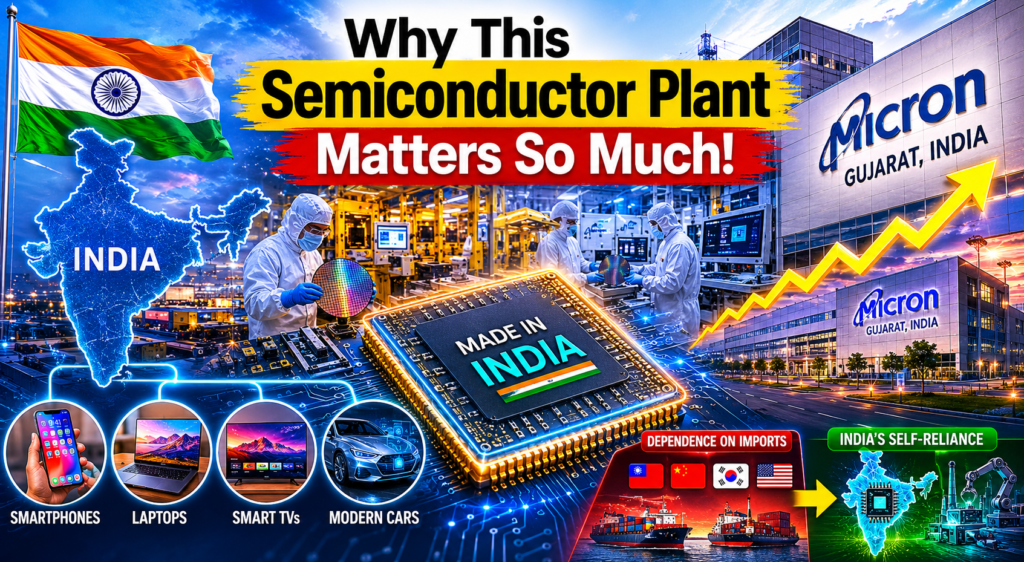
Why This Semiconductor Plant Matters So Much:
Most people use semiconductor chips every day without even realizing it.
The smartphone in your pocket, the laptop oon your desk, the smart TV in your home, and even modern cars all rely on tiny semiconductor components to function. without chips, modern technology simply cannot work.
During the COVID-19 pandemic, the world learned just important semiconductors are. A global chip shortage disrupted industries everywhere. Car manufacturers had to slow production, electronics companies faced delays, and supply chains struggled across countries.
India also felt the impact because the country imports most of its semiconductor requirements from nations like Taiwan, China, South Korea, and the United States.
That’s why Micron’s Investment in Gujarat is being called historic.
Instead of relying entirely on imports, India is now taking meaningful steps toward building its own semiconductor ecosystem.
What Exactly is Micron Building in Gujarat?
Micron Technology is one of the world’s leading semiconductor and memory chip companies. The company produces advanced memory and storage solutions used in millions of electronic devices globally.
Its new facility in Sanand focuses on:
- Assembly
- Testing
- Marking
- Packaging
These are some of the most critical stages in semiconductor producttion before chips are finally used in electronic products.
While the plant is not a full semiconductor fabrication unit yet, it still plays a very important role in the global chip supply chain. Experts believe this could also pave the way for more advanced semiconductor manufacturing projects in India in the future.
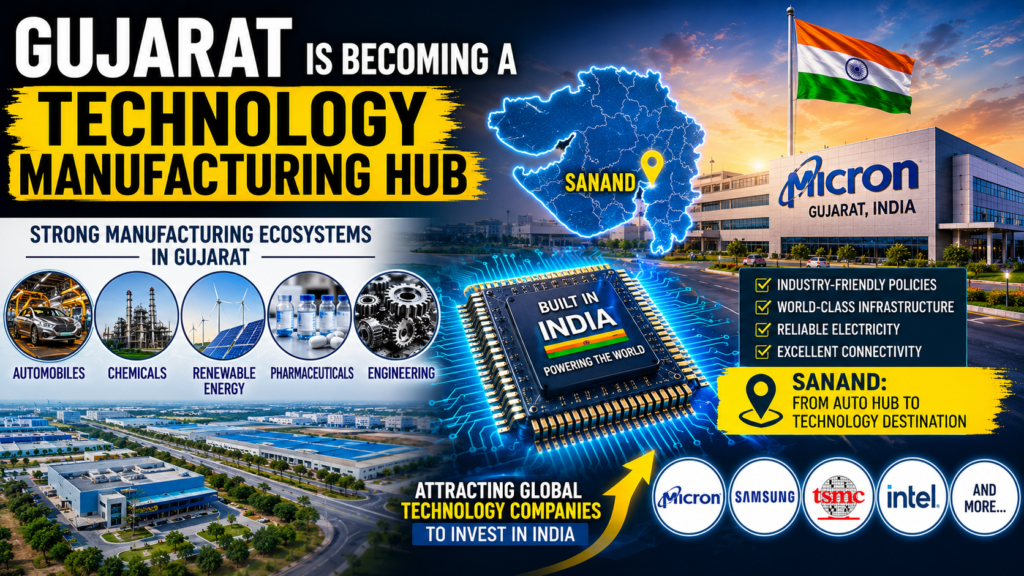
Gujarat Is Becoming a Technology Manufacturing Hub:
Over the years, Gujarat has built a reputation as one of India’s most industry-friendly states.
The state already has strong manufacturing ecosystems in:
- automobiles,
- chemicals,
- renewable energy,
- pharmaceuticals,
- and engineering.
Now, semiconductors are being added to that list.
Sanand, Which is already known for automobile manufacturing, is quickly emerging as a major industrial and technology destination. Good infrastructure, reliable electricity, supportive government policies, and connectivity made Gujarat an attractive choice for Micron’s investment.
This project is also expected to attract other global technology companies looking to invest in India.
A Big Boost for India’s “Make in India” Vision:

The semiconductor plant strongly aligns with Indian government’s Make in India campaign.
India has been trying to position itself as a global manufacturing hub for several years. While the country has made significant progress in smartphone assembly and electronics manufacturing, semiconductor production remained one of the missing pieces.
The government has introduced multiple incentive programs to encourage semiconductor investments, including:
- finacial subsidies,
- infrastructure support,
- tax benefits,
- and faster approvals.
Micron’s decision to establish this facility sends a strong message to the global market: India is serious about entering the semiconductor industry.
Why Semiconductors Are Called the “New Oil”:
Many experts now compare semiconductors to oil because of their importance to the global economy.
Almost every modern industry depends on chips today, including:
- Artificial Intelligence (AI)
- Electric vehicles
- Telecommunications
- Healthcare technology
- Aerospace
- Defense systems
- Cloud computing
- Consumer electronics
As technology continues to evolve, demand for semiconductor chips is rapidly around the world.
Countries that can manufacture or process semiconductors have a major economic and strategic advantage.
India understands this opportunity, and Micron’s Gujarat facility is one of the first major signs taht the country wants to become part of the global semiconductor supply chain.
Employment Opportunities and Economic Growth:
One of the biggest advantages of the semiconductor project is job creation.
The facility is expected to generate thousands of direct and indirect jobs across different sectors.
This includes opportunities in:
- semiconductor engineering,
- manufacturing operations,
- logistics,
- equipment maintenance,
- quality testing,
- and supply chain management.
Beyond direct employment, local businesses and service industries around Sanand are also likely to benefit.
Hotels, transportation companies, housing projects, restaurants, and support services often grow rapidly around major industrial developments.
For many young engineers and technical graduates in India, this project could open dorrs to high-value careers in semiconductor manufacturing.
India’s Long-Term Semiconductor Ambition:
Micron’s ATMP plant is just one step in a much larger vision.
India has launched an ambitious semiconductor mission aimed at building a complete semiconductor ecosystem in the country. The long-term goal includes:
- semiconductor fabrication plants,
- chip design centers,
- packaging facilities,
- research hubs,
- and advanced manufacturing infrastructure.
The Indian government hopes taht projects like Micron’s will encourage more international companies to invest in India.
Several global semiconductor firms are already exploring opportunities in the country as businesses look to diversify supply chains beyond traditional manufacturing cebters.
Challenges Still Remain:
Even though this project is a major milestone, India’s semiconductor journey is still at an early stage.
Semiconductor manufacturing requires:
- massive investments,
- advanced technology,
- specialized talent,
- clean-room enviroments,
- and highly reliable infrastructure.
Countries like Taiwan and South Korea spent decades building their semiconductor industries.
India will need patience, long-term planning, and continuous investment to compete globally.
Another important challenge is workforce development. Semiconductor manufacturing needs highly skilled engineers, technicians, and researchers. India will have to strengthen training programs and technical education to support future growth in this sector.
Conclusion:
The establishment of Micron Technology’s Assembly, Test, Marking, and Packaging facility in Sanand, Gujarat marks a historic milestone for India’s technology sector.
The project is more than just a manufacturing plant. It symbolizes India’s growing ambition to become a critical player in the global semiconductor industry.
From boosting employment and strengthening supply chains to supporting national security and advancing technological self-reliance, the benefits of this semiconductor facility are far-reaching.
As the world increasingly depends on semiconductor technology, India’s investment in chip manufacturing infrastructure could shape the country’s economic future for decades to come.
with strong government support, rising global demand, and increasing investor interest, India now has a unique opportunity to establish itself as a major semiconductor manufacturing destination in the years ahead.
2 thoughts on ““India Creates History With First Large-Scale Semiconductor Chip Plant””